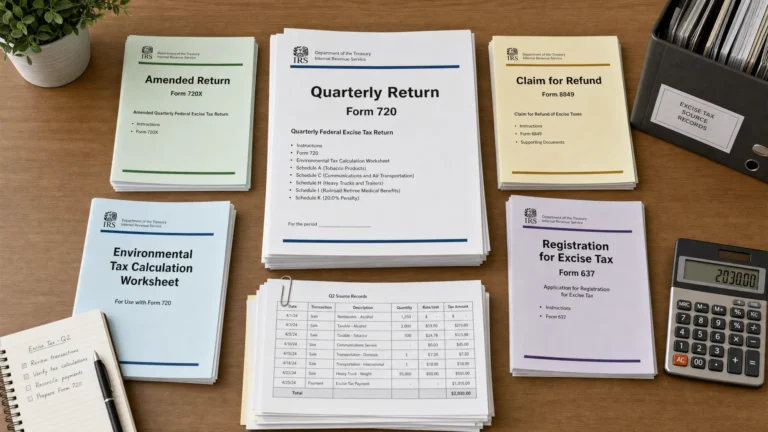
Local Telephone and Teletypewriter Exchange Services , Transportation of Persons by Air
Local Telephone and Teletypewriter Exchange Services
Stay compliant with the federal excise tax on telephone services using a fast online workflow. If you provide local phone lines, PBX trunks, Centrex or teletypewriter exchange connections the tax may apply to your billed amounts. eFileExcise720 helps carriers, resellers, hotels, campuses and enterprises report and pay the Communications and Air Transportation Taxes inside Form 720 with fewer steps and fewer errors.
What is taxable under IRS excise tax code 22
Under Internal Revenue Code section 4251 the local telephone excise tax applies to amounts billed for local telephone service and for teletypewriter exchange service. On Form 720 this appears as IRS No. 22 in Part II for communications. The base often includes subscriber line charges, access fees, minimum monthly service and similar recurring charges that let a user place or receive local calls.
Amounts for interstate or international toll service are handled under separate rules and many long distance services are not subject to this local tax. Voice over IP bundles can be complex. Keep invoices and tariff details so you can correctly separate taxable and nontaxable charges.
The teletypewriter exchange services tax follows the same rules as local service because it provides local exchange access under the telecommunications tax provisions.
Bundles that mix data, voice and video can be allocated using reasonable methods tied to stand alone pricing. Local phone service excise tax does not apply to charges that do not provide access to a local exchange. If your invoices include federal universal service fees do not treat those as the tax base. For resellers collect tax on the price you bill to the customer. Keep exemption certificates where customers qualify for relief.
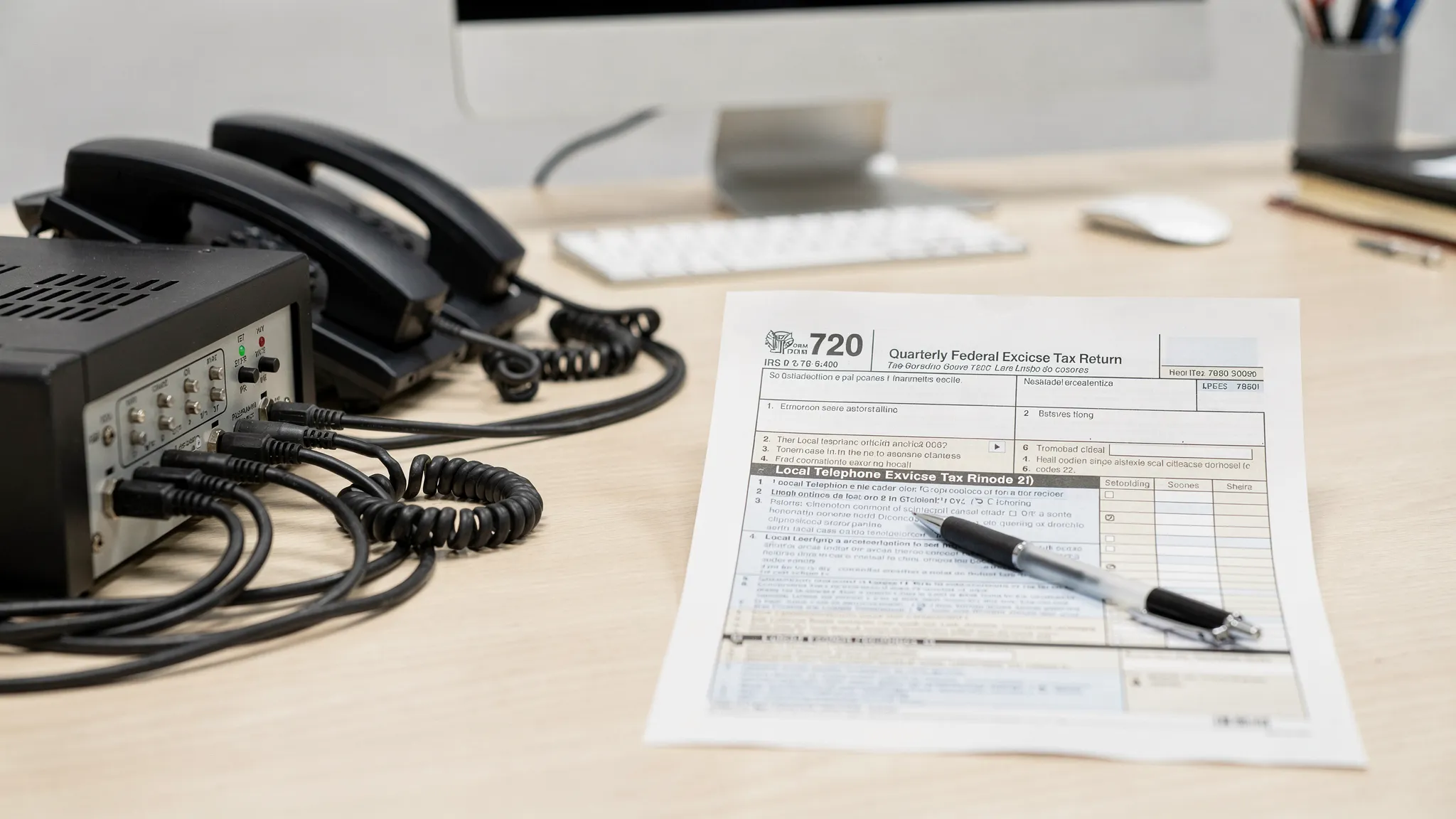
Who must file and when
If you bill customers for access to a local exchange or you resell such access you are responsible for collecting the local telephone exchange services tax and filing quarterly. The tax is generally 3 percent of the taxable amount. Due dates fall at the end of the month after each quarter and deposits may be required if liability exceeds thresholds set by the IRS.
How to report on Form 720
Report the local telephone exchange services tax in Part II under IRS No. 22. Enter the taxable amount for the quarter and compute the tax. Most filers complete Schedule A for deposits then sign on the declaration page. Always keep workpapers that tie billed revenue to taxable base so your return matches your books.
eFileExcise720 is an IRS authorized e filing provider, so you can transmit securely without software downloads. Create a free account, complete the simple questionnaire and submit in minutes.
See the current IRS Instructions for Form 720 to confirm line numbers and rates.
How eFileExcise720 simplifies your filing
Our platform guides you through each screen with plain language prompts. You get built in validations that check math and common errors before you submit. Data is protected with secure encryption and your dashboard stores prior filings for easy amendments. If you need a claim for a refund we also support the 8849 form.
- IRS authorized e filing for accuracy and speed
- Simple dashboard navigation
- Personalized customer support by chat or phone
- No software download needed
- Supports local telephone exchange services tax and Form 720 amendments
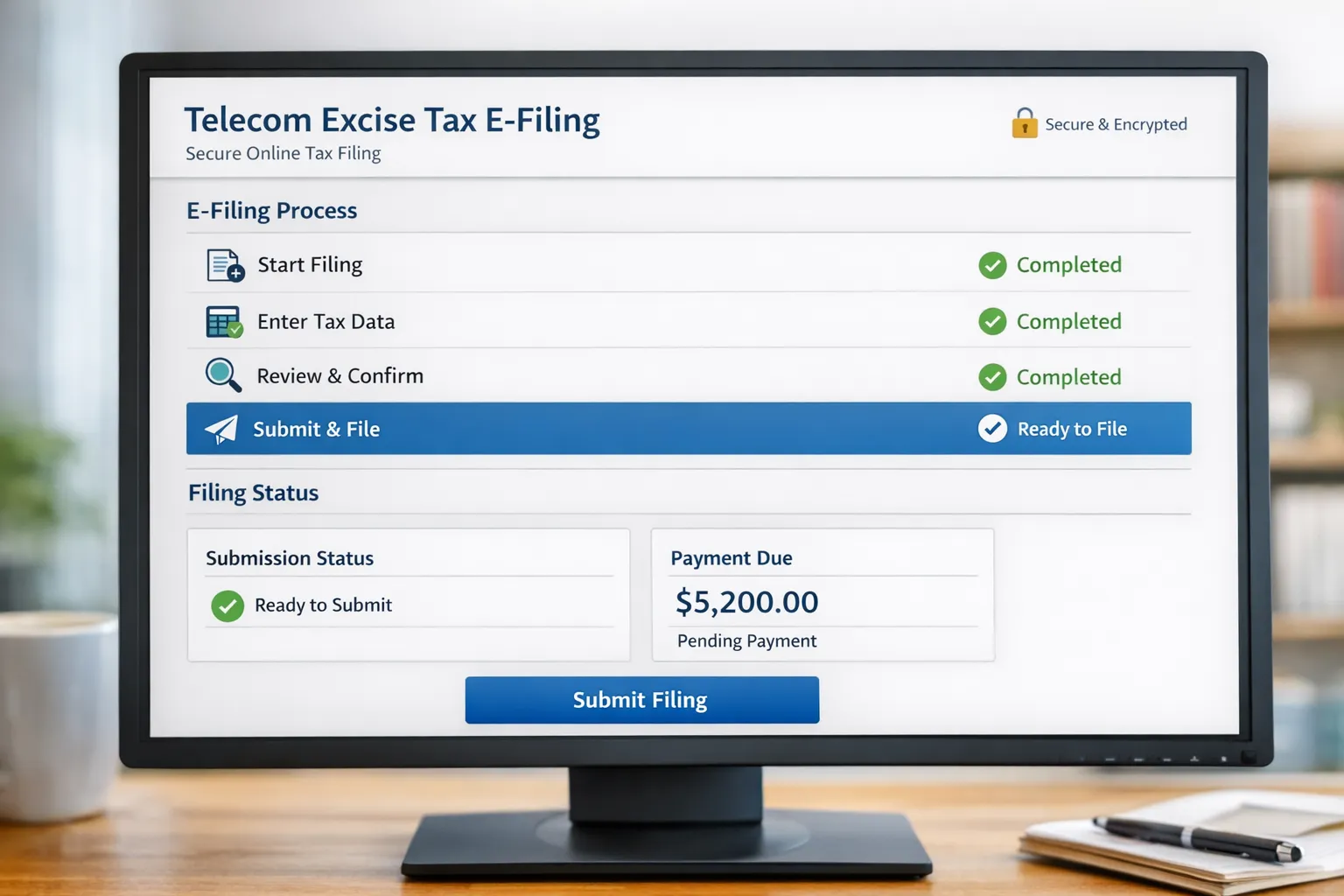
We are an IRS authorized provider dedicated to excise tax e filing. Our team offers personalized support that helps you complete returns correctly the first time. You can start free, save drafts and file only when you are ready. To learn more see our about us page.
Our workflow fits how telecom billing works. You can map revenue categories to the Form 720 local telephone tax line, tag exempt charges and generate a clean summary that matches your GL. The tool supports Telephone services excise tax filing for both carriers and resellers. If guidance changes in federal excise tax telecommunications we adjust the questions so your return stays accurate.
You can start anytime. Your progress saves automatically so you can pause and return later. When everything looks correct submit with one click and get an electronic acknowledgment right on your dashboard.
FAQs for Local Telephone and Teletypewriter Exchange Services
How is the tax rate calculated? The local telephone service tax is generally 3 percent of the taxable amount. Multiply your taxable charges by 0.03 then report the tax under IRS No. 22 in Part II.
What services are included? Charges that allow a subscriber to place or receive local calls are usually taxable. Access lines, Centrex, PBX trunks, measured service, minimum service and teletypewriter exchange services often fall in scope.
What is not taxable? Items that do not provide access to a local exchange are not part of the base. Examples include late fees, equipment rentals or inside wiring unless they are bundled without a reasonable allocation.
Who files the return? The person or business that bills the end customer generally collects the tax and files quarterly using Form 720. Resellers usually file on the amounts they bill to their customers.
Can I claim a refund for overcollected amounts? You may file a claim after correcting customer accounts. If a claim is needed for quarters already filed you can request a credit or refund using the 8849 form.
How does eFileExcise720 help? The system walks you through Part II and IRS No. 22 then validates totals, stores copies and lets you transmit securely as an IRS authorized provider with live support when you need it.
Conclusion and next steps
Collect your invoices, confirm what is taxable and get your return ready today. eFileExcise720 makes filing for Local Telephone and Teletypewriter Exchange Services simple, fast and secure. Create your account, follow the prompts, review totals then submit with confidence. Start filing now with our secure IRS authorized portal. So easy.
Transportation of Persons by Air
Airlines, charter operators and ticketing intermediaries must collect and report the federal excise tax on air transportation. This includes the percentage ticket tax and per segment charge that apply to taxable domestic travel. eFileExcise720 makes it easy to e file Form 720 under Communications and Air Transportation Taxes so you stay compliant without delays.

What is taxed under the Transportation of Persons by Air Tax
The tax generally applies to amounts paid for the right to travel by air between points in the United States and certain nearby territories. The base includes the fare and many mandatory charges. Optional services that do not affect the right to travel, like seat upgrades sold after purchase or in flight food, are usually not part of the base.
Some international itineraries also include charges for the use of international air travel facilities which are reported separately. For mixed trips that cross borders review the routing to decide which legs are taxable under air transportation taxes and which are subject to other rules.
Amounts paid for helicopter tours, scenic flights or charter services are generally subject to the same rules when the flight transports persons from one point to another. When a flight is solely for training, not transportation, the tax may not apply. Review the purpose of the flight, the route and the charges to classify each sale correctly.
Who must file and deposit
Generally the person that receives payment for taxable air travel collects the tax, holds it in trust and files quarterly. Air carriers, scheduled and charter, along with ticketing brokers that sell transport for hire, often have filing duties. Deposits may be required based on liability thresholds that the IRS publishes.
This is often called the air transport tax and it funds aviation programs.
How to report on Form 720 Air Transportation Tax
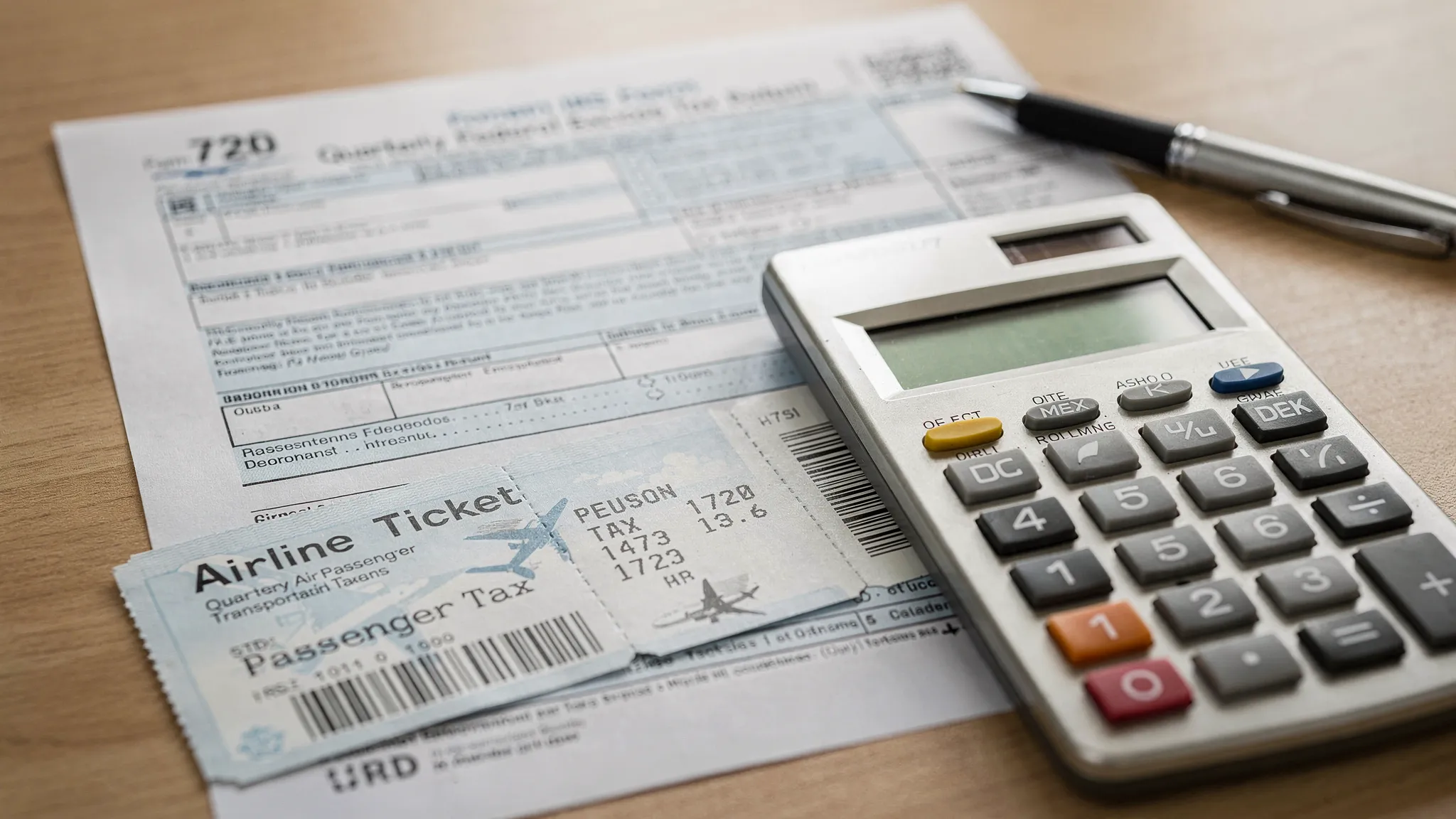
Report the percentage ticket tax and segment charge in Part II on Form 720 using IRS No. 26. Enter the taxable base for the quarter then compute the tax at the published rates. Complete Schedule A for deposits if you were required to make deposits during the quarter. Keep records that reconcile ticketing systems, agency statements and your general ledger.
Rates and fees change most years so confirm current amounts before you file. Exemptions can apply to skydiving flights, emergency medical transport or travel to small rural airports. Check the Instructions for details so you do not overcollect or underpay.
Our system stays current with air transportation excise tax rules. It helps you apply the federal excise tax on air transportation correctly and report the air transportation tax amounts on the right lines each quarter.
How eFileExcise720 streamlines compliance
With eFileExcise720 you can complete accurate returns in minutes. The workflow uses plain language, auto math checks and context help. You can import figures from your reports, review a clean summary and transmit securely as an IRS authorized provider.
- IRS authorized e filing for passenger air taxes
- Simple dashboard navigation
- Personalized customer support
- No software download needed
- Support for Form 720 amendments and refund claims
You can start free then pay only when you file. See pricing on our site for details. If you ever need a credit or refund after filing we support the 8849 form. To learn who we are visit our about us page and see why carriers trust us for Form 720 processing.
We show the right lines for Form 720 Air Transportation Tax and keep your Schedule A totals aligned. You can upload a simple spreadsheet or key in totals. The system checks for missing deposits so you can fix issues before submission.
FAQs for Transportation of Persons by Air
What is the current rate for the ticket tax and the segment fee? The rates change most years. Airlines and operators should verify the percentage ticket tax and the domestic segment fee in the latest IRS guidance before filing and should update systems when changes take effect.
Who is responsible for collecting the Passenger Air Transportation Tax? The entity that receives the payment for taxable air travel usually collects it. This can be an air carrier, a charter operator or a ticketing intermediary depending on the contract and the flow of funds.
What about international trips? Travel that begins or ends outside the United States can involve separate charges for the use of international air travel facilities which are reported apart from the domestic passenger tax on Form 720.
How do deposits work? If your liability exceeds IRS thresholds you may need to make semimonthly deposits. Our system gives you a clear Schedule A view so your return reflects what you deposited during the quarter.
When should I file the quarterly return? Returns are due at the end of the month after each quarter. File on time to avoid penalties and interest and keep proof of transmission with your electronic acknowledgment.
Can I request a refund if I overcollected? Yes, after you correct customer accounts you can request a credit or refund. If the period has closed you can file a claim using the 8849 form and reference the relevant quarter.
Conclusion and next steps
Collect your ticketing data, confirm taxable amounts and file with confidence. eFileExcise720 helps you report the Transportation of Persons by Air correctly with fewer steps and fewer errors. Create your account, follow the prompts and submit your return in minutes with an instant acknowledgment. Start filing now on our portal and stay ahead of air transportation taxes. Create your free account and start your first return in a few clicks. Our step by step flow reduces errors, keeps your data secure and gives you a clear audit trail so you can answer questions from finance or auditors quickly. Start today.