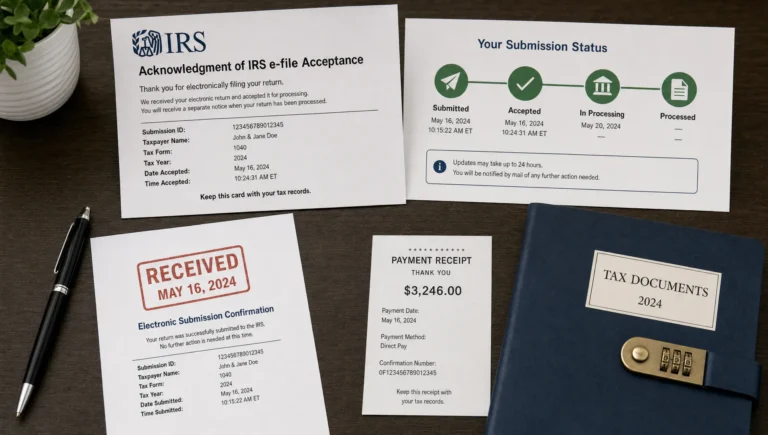
A Complete Guide to Excise Tax Filing for Small Businesses in the U.S.
Small businesses usually think of excise taxes as “big-company stuff” (fuel terminals, airlines, chemical manufacturers). In reality, Excise Tax Filing for Small Businesses is increasingly relevant for employers offering certain health plans (PCORI), importers selling specialized products, communications providers, and growing businesses that cross into regulated categories through partnerships, acquisitions, or new product lines.
This guide focuses on strategy and practical decision-making: how to spot excise exposure early, forecast cash impact, choose the right form (Form 720 vs the 8849 form), and build a repeatable quarterly workflow that holds up under IRS scrutiny.
What excise taxes hit small businesses most often in 2026?
Federal excise taxes are activity-based. You do not “opt in” to them, you trigger them by doing something taxable. For small businesses, the most common surprises tend to fall into three buckets:
1) Employer plans and the PCORI Fee (Form 720 PCORI)
If you sponsor certain self-insured health arrangements, you may owe the PCORI Fee. Even though it is annual, it is reported on IRS Form 720 (often referred to as the pcori 720 form or form 720 pcori in searches). This creates a common pitfall: a company that never files quarterly excise suddenly needs a tight annual process.
Actionable tip: treat PCORI like a “once-a-year quarter close” with the same rigor as payroll filings, especially if your covered lives methodology changed after renewals.
2) Fuels, environmental, and specialty product excise categories
Many small firms touch fuel taxes through fleet operations, off-highway use, exports, or resale. Others run into environmental excise rules through importing, manufacturing, or distributing certain products.
3) Communications and transportation billing models
If you bill customers for taxable communications services, bundled pricing and multi-line invoices can create reporting complexity, especially when systems change.
For official form overviews, start with the IRS pages for Form 720 (Quarterly Federal Excise Tax Return) and IRS Form 8849 (Claim for Refund of Excise Taxes).
Form 720 vs tax form 8849: the strategic difference
Think of Form 720 as your primary liability return and tax form 8849 as a claim mechanism.
- Form 720 is used to report and pay excise tax for the quarter (or to file required lines even if the amount is small).
- IRS Form 8849 is used to claim certain refunds or credits of excise taxes already paid, often with schedules that depend on the claim type.
A simple decision rule:
- You owe tax for a quarter, file Form 720.
- You overpaid, paid on exempt use, or need a refund path that the rules allow, consider the 8849 form.
If you want a deeper comparison, see Form 720 vs Form 8849: What’s the Difference?.

“Zero Liability Return” and why it matters
Some businesses discover they are registered for an excise category, or have filing expectations tied to an activity, but for a given quarter they have no taxable transactions. Depending on the specific rules and your situation, you may still need to file a Zero Liability Return to keep compliance clean and avoid IRS notices.
Strategic lesson: treat zero-liability quarters as a control signal. If you expected activity but show zero, validate whether the operational data feed broke (invoice mapping, gallons reporting, importer-of-record data, or plan counts).
A small-business excise tax “close” you can repeat (with a timeline chart)
Most late or incorrect filings are not “tax knowledge” problems, they are process problems. Build a lightweight excise close that mirrors an accounting close.
| Timing (relative to quarter end) | What to do | Output you should keep |
|---|---|---|
| Week 1 | Confirm which excise categories you triggered (products, services, plan status changes) | Taxability memo (1 page) |
| Week 2 | Pull source data (billing extracts, gallons, imports, covered lives) and reconcile to GL | Reconciliation workbook |
| Week 3 | Compute liability, deposits (if applicable), and draft Form 720 lines | Calculation support |
| Week 4 | File Form 720 and schedule payment method | Filing confirmation + payment proof |
| Ongoing | Track refund opportunities and supporting docs for Form 8849 | Claim file by schedule |
This “close” becomes especially valuable during system migrations, rapid growth, or leadership transitions.
Trends shaping excise compliance for small businesses
Trend 1: More “accidental filers” through growth and product expansion
Small businesses are adding revenue lines faster than they add compliance controls. New bundles, new SKUs, and new states can introduce excise exposure without anyone realizing it.
Investor-style takeaway: in acquisitions, excise is a frequent diligence blind spot because it sits outside income tax workflows. A buyer may underwrite EBITDA correctly but miss an excise control gap that creates penalties and cleanup work later.
Trend 2: Refund workflows are becoming a working-capital lever
When eligible, a well-documented refund claim process can improve cash flow. The difference between “we might be eligible” and “we have a repeatable claim file” is operational discipline.
Composite example (based on common patterns): a regional contractor with significant off-highway equipment use treats fuel excise tracking like job costing, tags eligible gallons monthly, then submits periodic claims using the correct Form 8849 schedule. The result is not just a refund, it is predictable cash timing and fewer rushed reconciliations.
Trend 3: Finance and tax hiring is harder, so systems must do more
If you are scaling and your current team is stretched, you may need a dedicated compliance lead or controller with indirect tax exposure. Some growing firms use an international recruitment agency to find finance leadership when expansion, new markets, or complex compliance is part of the growth plan.
State callouts: 720 filing Pennsylvania and 720 filing Florida
A key clarification: Form 720 is federal, not state. However, businesses searching “720 filing Pennsylvania” or “720 filing Florida” often have one of these situations:
- They operate in those states and need to coordinate federal excise reporting with state fuel, environmental, or sales tax rules.
- They received a notice, changed entity structure, or added a location and want to confirm what filings changed.
Strategic advice: create a one-page “tax footprint map” by state (registrations, filing frequencies, responsible owner). Federal Form 720 becomes one line item in that map, but it is easier to manage when everything is visible.
Where E Eile Excise 720 fits in a small-business workflow
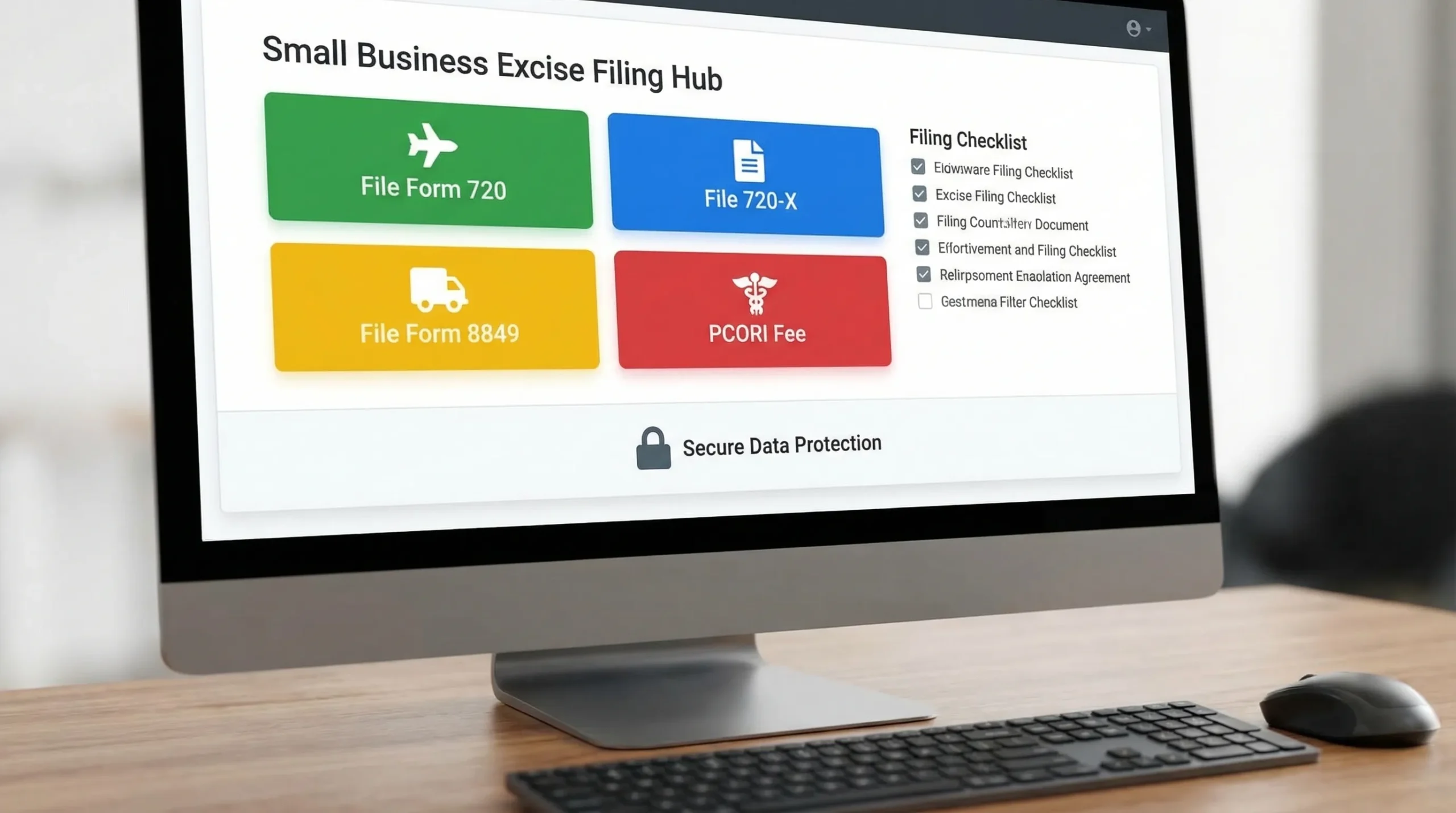
If your goal is to reduce time spent on compliance while tightening documentation, E Eile Excise 720 (eFileExcise720) is designed to simplify Form 720 e-filing and related excise workflows.
What matters for small businesses is not just submission, it is control:
- IRS-authorized e-filing, with a secure submission process
- No software download needed and free account creation
- Support for Form 720, amendments (720-X), and Form 8849 claims
- Coverage across Form 720 categories, useful when a business grows into new excise activities
Frequently Asked Questions
What is Excise Tax Filing for Small Businesses? Excise tax filing is the process of reporting and paying certain federal taxes triggered by specific activities (like certain fuel, communications, environmental taxes, or the PCORI fee), commonly reported on IRS Form 720.
When do I file Form 720? Form 720 is generally filed quarterly. The standard due dates are April 30, July 31, October 31, and January 31 for the prior quarter.
Is the PCORI Fee filed on Form 720? Yes. The PCORI Fee is reported on IRS Form 720 (often as a second-quarter filing), even though the fee is annual.
What is the 8849 form used for? The 8849 form (IRS Form 8849) is used to claim refunds or credits for certain excise taxes already paid, when the rules allow a refund claim path.
Can I file a Zero Liability Return on Form 720? In some situations, businesses file a return showing zero tax to maintain compliance continuity. Whether you should file depends on your specific excise category, registration status, and IRS rules.
Does 720 filing Florida or 720 filing Pennsylvania mean there is a special state Form 720? No. Form 720 is a federal form. Those searches usually relate to coordinating federal excise obligations with state-level tax and registration requirements.
Ready to make excise filing predictable?
If you are trying to keep excise compliance from becoming a quarterly fire drill, start by documenting your excise triggers, building a simple close calendar, and choosing a filing method that creates a clean audit trail. When you are ready to file, E Eile Excise 720 (eFileExcise720) can help you e-file Form 720 online securely, manage amendments (720-X), and support refund claims with Form 8849.
Get started at eFileExcise720 and turn excise compliance into a repeatable process instead of a recurring surprise.