Are Free Taxes Online Tools Enough for Excise Filing?
Free tax software has made many filings easier, especially for individuals with straightforward income tax returns. But federal excise tax filing is a different compliance problem. If your business owes or reports excise taxes on IRS Form 720, a generic free tool may help you get organized, but it usually is not enough to complete the filing accurately and securely.
The short answer: free taxes online tools can be useful for research, estimates, and basic document preparation, but businesses that must file Form 720 generally need an excise-focused filing workflow and an IRS-authorized e-file provider.
That distinction matters because Form 720 is not a simple annual income tax form. It is a quarterly federal excise tax return covering specialized categories such as fuel, environmental taxes, communications, air transportation, indoor tanning, ship passenger tax, manufacturers excise taxes, and the PCORI fee. The return can involve IRS numbers, schedules, deposits, category-specific calculations, supporting documentation, and possible amendments or refund claims.
What free taxes online tools are usually built to do
When people search for free taxes online, they often mean free or low-cost income tax preparation tools. The IRS, for example, offers IRS Free File for eligible individual taxpayers filing federal income tax returns. Many commercial tax software providers also offer free tiers for simple personal returns.
Those tools can be valuable, but they are typically designed around Forms 1040, W-2s, 1099s, deductions, credits, and state income tax workflows. Federal excise filing is not the same thing.
Here is where common free resources help, and where they fall short for Form 720 filers.
| Free online resource | What it can help with | Where it may fall short for Form 720 |
|---|---|---|
| Free income tax software | Personal income tax returns and basic federal filing | Usually not designed for quarterly business excise tax reporting |
| IRS instructions and PDFs | Understanding official rules and line references | Does not provide a guided excise e-file workflow or filing support |
| Spreadsheets and calculators | Estimating gallons, units, premiums, fees, or taxable sales | Cannot transmit Form 720 to the IRS and may not catch category errors |
| Generic bookkeeping software | Organizing invoices, sales, fuel records, or receipts | May not map transactions to Form 720 IRS numbers or schedules |
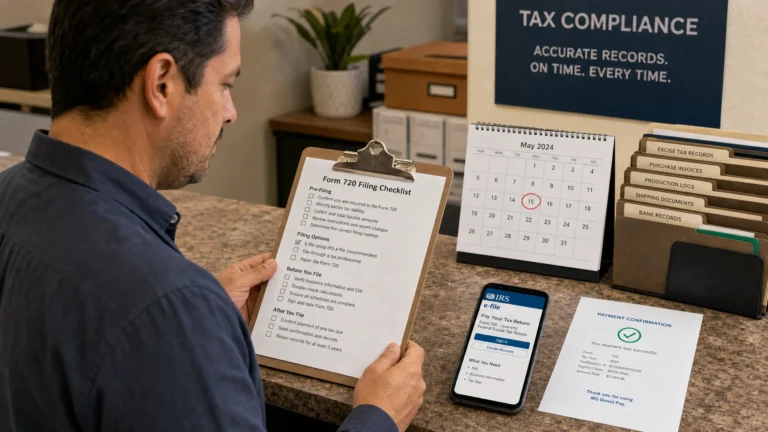
| Free checklists | Preparing data before filing | Does not replace calculation review, e-file validation, or IRS acknowledgement |
A free tool can support your process, but it should not be mistaken for an excise compliance system.
Why excise filing is different from a simple tax return
IRS Form 720, the Quarterly Federal Excise Tax Return, is activity-based. Your filing requirement depends on what your business does, sells, imports, manufactures, or sponsors. The IRS provides the official Instructions for Form 720, and those instructions cover many tax categories with different rules.
Unlike a basic income tax return, Form 720 often requires you to answer operational questions before you can even calculate the tax. For example, did your business sell taxable fuel? Import petroleum products? Provide indoor tanning services? Sponsor a self-insured health plan subject to the PCORI fee? Collect communications excise tax? Operate in a category that requires semi-monthly deposits?
Those questions are not always handled well by generic free tools.
| Excise filing issue | Why it matters |
|---|---|
| Correct tax category | Form 720 uses specific IRS numbers and lines for different excise taxes |
| Quarterly reporting | Most Form 720 obligations are reported by quarter, not annually |
| Deposit tracking | Some filers must make deposits before the return due date |
| Supporting schedules | Certain taxes may require Schedule A, Schedule T, Schedule C, or related forms |
| Documentation | Filers may need invoices, gallon records, import records, plan counts, or sales data |
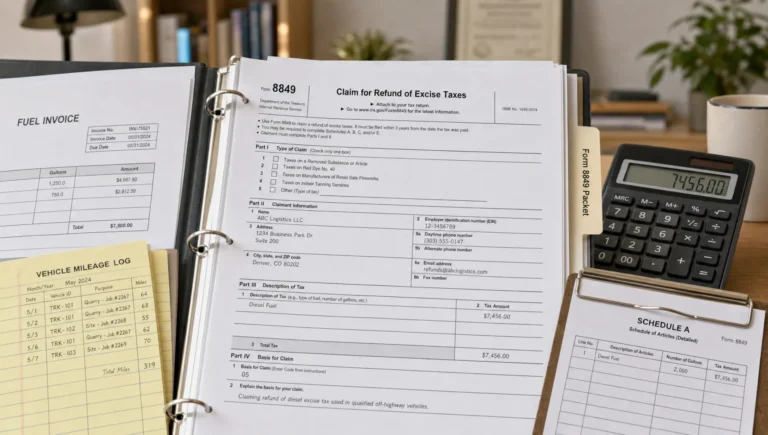
| Corrections and refunds | Errors may require Form 720-X or Form 8849, depending on the situation |
This is why a free estimate and a compliant filing are not the same thing. The IRS may accept a return for processing, but acceptance does not mean the IRS has approved every tax position or calculation. Your records and category choices still matter.
When free online tools may be enough
Free tools can be enough during the early research stage. If you are trying to understand whether excise tax might apply, reviewing official IRS resources and using simple calculators can be a practical starting point.
They may also be useful when you are gathering documents before filing. For example, a spreadsheet can help you reconcile gallons sold, taxable service revenue, plan participant counts, or imported quantities. A free checklist can help your finance team prepare data before the quarter closes.
Free tools may be reasonable if you are doing one of the following:
- Learning what Form 720 is and whether your business activities might trigger it.
- Estimating a potential liability before confirming the final calculation.
- Organizing invoices, receipts, meter readings, fuel logs, or plan records.
- Preparing questions for a tax professional or internal finance team.
- Filing a simple personal income tax return that has nothing to do with federal excise taxes.
In those cases, free taxes online tools can reduce confusion and help you prepare. The problem begins when a business relies on a generic tool to handle a specialized excise filing requirement.
When free tools are not enough for excise filing
If your business must actually file Form 720, the standard should be higher than free research or a spreadsheet. You need a process that helps you report the correct category, submit the return through an appropriate filing channel, protect sensitive business data, and keep proof of filing.
Free tools are usually not enough when:
- Your business has a confirmed Form 720 filing requirement.
- You report more than one excise tax category in the same quarter.
- You need to track semi-monthly deposits or complete Schedule A.
- You are reporting fuel, environmental, communications, air transportation, or manufacturer-related excise taxes.
- You need to file a zero liability return after a filing obligation has been established.
- You need to amend a prior Form 720 or claim an excise tax refund.
- You need customer support for a rejected return, category question, or filing workflow issue.
For example, a business selling taxable fuel may need to reconcile gallons, tax rates, deposits, and documentation. A self-insured employer reporting the PCORI fee must use the applicable covered lives count and file at the correct time. An importer reporting petroleum-related taxes may need customs and inventory documentation. These are not typical personal tax software situations.
If you are unsure whether you need to file, start with a filing requirement review. You can also read our guide on who must file IRS Form 720 for a practical breakdown of activity-based triggers.
2026 Form 720 due dates to keep in mind
For most quarterly Form 720 filers, the return is due by the last day of the month following the end of the quarter. If the due date falls on a weekend or legal holiday, the due date generally moves to the next business day. Always verify current IRS guidance for your specific situation, especially if payment or deposit rules apply.
| 2026 filing quarter | Tax period | General Form 720 due date |
|---|---|---|
| Q1 2026 | January 1 to March 31 | April 30, 2026 |
| Q2 2026 | April 1 to June 30 | July 31, 2026 |
| Q3 2026 | July 1 to September 30 | November 2, 2026, because October 31 is a Saturday |
| Q4 2026 | October 1 to December 31 | February 1, 2027, because January 31 is a Sunday |
Some excise taxes also involve deposit requirements that are separate from the filing deadline. Missing a deposit can create penalties even if the return is filed on time. For more detail, see our guide to Form 720 due dates and our overview of Form 720 penalties and interest.
What an excise-ready filing workflow should include
A reliable Form 720 process should do more than let you type numbers into a form. It should help you move from raw business activity data to a filed return with a clear record of what was submitted.
Before filing, you should have your legal business name, EIN, tax period, excise tax categories, taxable quantities or amounts, deposit records, supporting schedules, and payment information ready. If you are claiming a credit or correcting a previous filing, you should also confirm whether Form 720-X or Form 8849 is the correct path.
A serious excise filing workflow should include the following capabilities.
| Filing capability | Why it matters for Form 720 |
|---|---|
| IRS-authorized e-filing | Helps you submit through an approved electronic filing channel |
| Excise category support | Reduces the risk of using the wrong line or IRS number |
| Secure data handling | Protects EINs, tax data, payment details, and business records |
| Guided navigation | Helps teams move through the return without relying on paper forms alone |
| Filing acknowledgement | Provides confirmation that the IRS received or accepted the electronic submission |
| Customer support | Helps resolve workflow questions, rejects, and filing issues |
| Amendment and refund support | Helps when prior returns need correction or a claim must be filed |
This is where a dedicated excise filing platform becomes more useful than a general free tax tool.
How eFileExcise720 helps bridge the gap
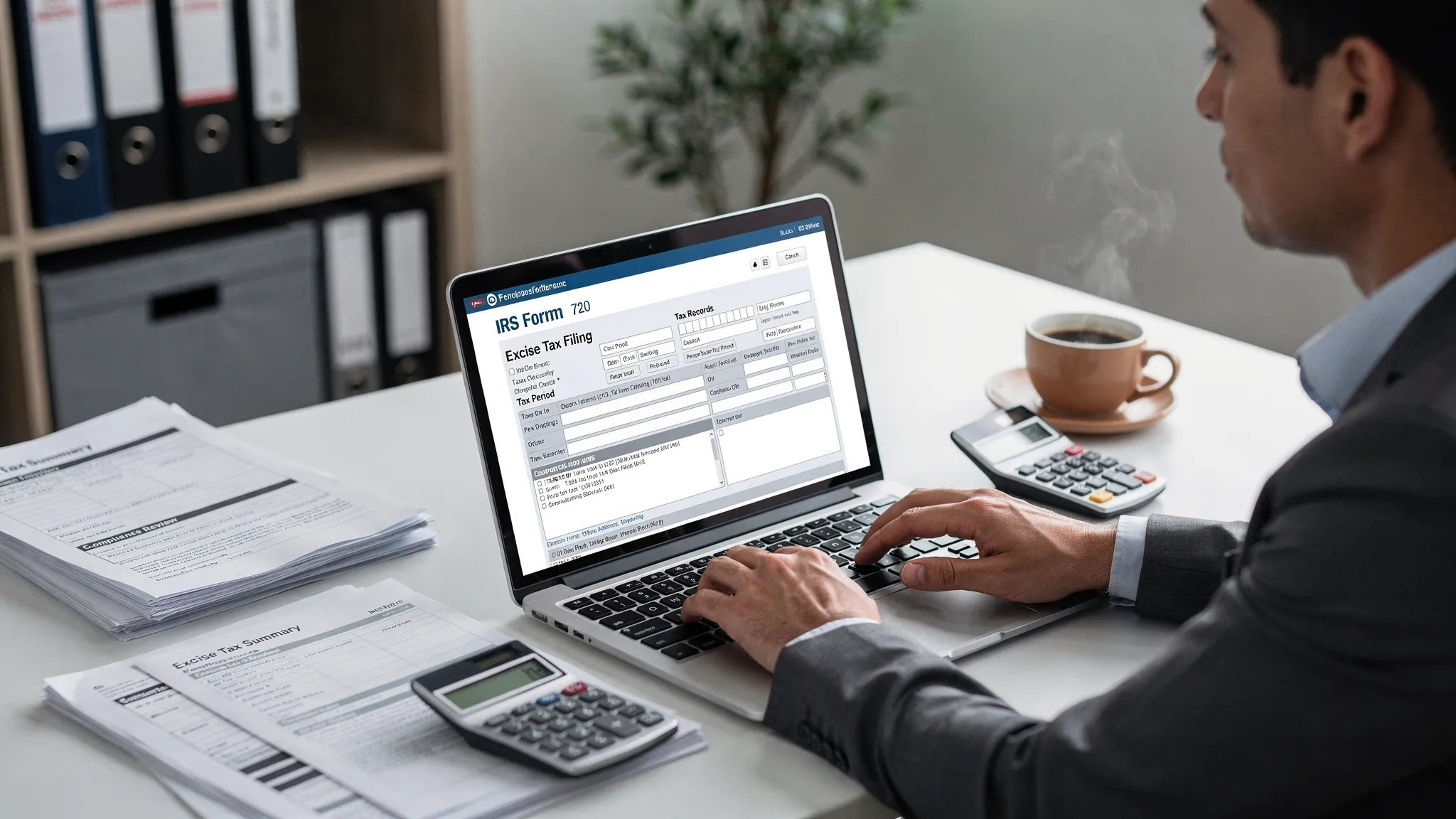
eFileExcise720 is an IRS-authorized online platform built for Form 720 federal excise tax filing. It is designed for businesses that need a secure, online way to prepare and submit excise returns without downloading software.
The platform offers free account creation, simple dashboard navigation, secure data protection, dedicated customer support, and support for all Form 720 categories. It also supports related compliance needs such as Form 720 amendments using Form 720-X and excise refund claims using Form 8849.
That does not mean every business has a complicated filing. Some filers may only report one category or even file a zero liability Form 720 return. But even a simple excise return benefits from accurate category selection, secure submission, and a record of filing.
If you are comparing options, the practical question is not whether free taxes online tools are bad. They are not. The better question is whether the tool you are using was actually built for Form 720.
A practical decision rule for business owners
Use free tools to learn, estimate, and organize. Use an excise-specific e-file workflow when it is time to file.
A simple decision rule looks like this:
- If you are researching: Use IRS instructions, educational articles, and checklists to understand whether excise tax applies.
- If you are calculating: Use internal records, spreadsheets, and tax guidance to confirm taxable quantities, fees, or sales.
- If you are filing: Use an IRS-authorized Form 720 e-file provider that supports your excise category.
- If you are correcting: Confirm whether Form 720-X or Form 8849 applies before submitting anything.
- If you are unsure: Get help before the due date, because late filing, late payment, and deposit penalties can add up.
For a detailed preparation process, review our Form 720 e-filing checklist for 2026.
Frequently Asked Questions
Can I file Form 720 with free taxes online software? Most free online tax software is designed for individual income tax filing, not quarterly federal excise tax returns. If you need to file Form 720, confirm that the provider specifically supports IRS-authorized excise e-filing.
Is IRS Free File available for Form 720? IRS Free File is primarily for eligible individual federal income tax returns. Form 720 is a business excise tax return, so businesses generally need a different filing method, such as paper filing or an IRS-authorized excise e-file provider.
Do I need to file Form 720 if my business has no excise tax due this quarter? Possibly. If your business has an established Form 720 filing obligation, you may need to file a zero liability return for the quarter. The answer depends on your specific tax category and filing facts.
What records should I keep for excise tax filing? Keep records that support the category and calculation, such as invoices, gallons or units, import records, sales reports, plan participant counts, deposit confirmations, exemption certificates, and prior returns.
What if I made a mistake on a prior Form 720? Some corrections may require Form 720-X, while certain refund or credit claims may use Form 8849. The right form depends on the type of error, the tax category, and whether you are correcting liability or claiming a refund. You can compare the options in our guide to Form 720 vs. Form 8849.
Ready to move beyond generic free tax tools?
Free online resources can help you understand excise taxes, but Form 720 filing requires accuracy, timing, security, and category-specific support. If your business needs to file, do not rely on a tool built for a different type of tax return.
Create a free account with eFileExcise720 to file your Form 720 online through an IRS-authorized platform, access dedicated support, and manage your federal excise tax compliance with less stress.