
Domestic Petroleum Oil Spill Tax & Imported Petroleum Products Oil Spill Tax (21)
Domestic Petroleum Oil Spill Tax
The Domestic Petroleum Oil Spill Tax applies to crude oil received at a U.S. refinery and is one of the environmental excise taxes reported quarterly on Form 720. It is designed to help fund federal response and cleanup for oil spills. Because the rules are precise and the rates can change, refineries and related businesses should review current IRS guidance each quarter and keep clear records of all receipts measured in barrels.
Where this tax appears and what it covers
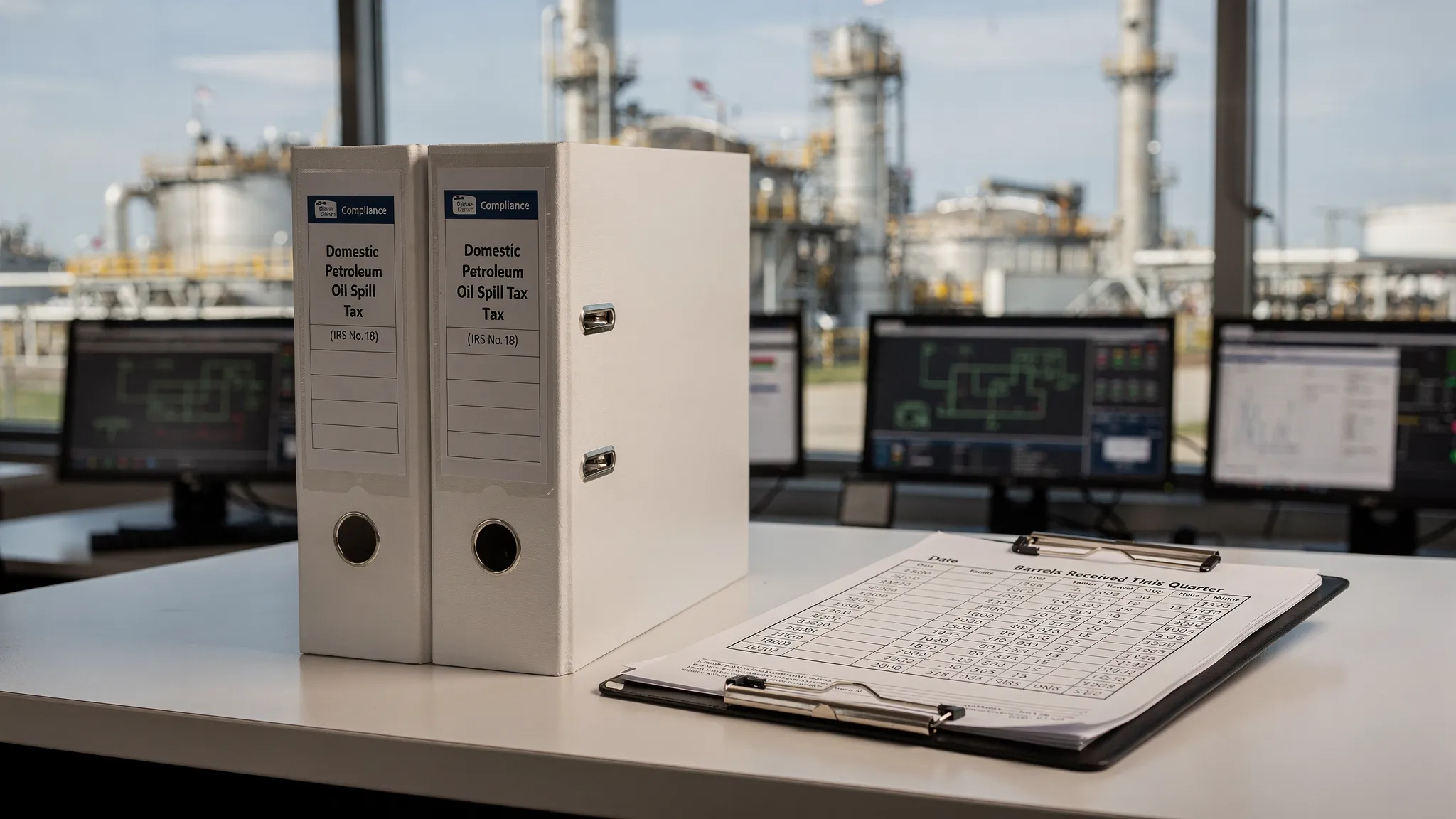
This tax is reported in the Environmental Taxes section of Form 720 Part II, specifically associated with IRS No. 18. It applies to crude oil when it is first received by a refiner at a facility located in the United States. The measure is barrels, so it is important to maintain records that show total receipts and any amounts that qualify for credits or exemptions.
For general filing requirements, return due dates, and electronic filing options, see the IRS page About Form 720 and the instructions that accompany it.
Who is liable and when liability arises
The person that first receives crude oil at a U.S. refinery is generally liable. Liability is triggered at the point of receipt, not at later stages of processing or distribution. This tax is part of the broader Oil Spill Liability Tax regime, which funds the federal trust used for spill response and remediation.
If multiple parties handle the crude before it reaches the refinery gate, the key question is who first receives the product at the refinery for processing. Businesses should align contracts, bills of lading, and meter tickets with their tax positions so that the liable party is clearly identified.
How to compute and report each quarter
- Identify all taxable receipts of crude oil at U.S. refineries for the quarter, measured in barrels.
- Apply the current statutory rate to the taxable barrels.
- Subtract any allowable credits or exemptions and keep documentation for each adjustment.
- Report the total liability in the Environmental Taxes section of your quarterly form 720. Payment is generally made with the return.
You will include this in the section commonly referenced as Oil Spill Tax Form 720, which groups related environmental excise items. For Petroleum Oil Spill Tax Filing, align your internal reports so that quarterly totals reconcile to meter readings, tank receipts, and accounting records.

Exemptions, credits, and corrections
Certain situations may allow reductions or credits. Common examples include product that is later exported or volumes proven to be non-taxable under applicable law. Keep detailed documentation for any claimed credit, including shipping records, export documents, and reconciliation worksheets.
- If you discover an overpayment after you file, you can request a refund or credit using the 8849 form or correct a previously filed quarter using Form 720-X, as applicable.
- Rate changes and temporary lapses can occur. Review the Domestic Oil Spill Tax IRS instructions each quarter to confirm the current rate and any changes to eligibility or reporting.
Recordkeeping and common errors to avoid
Accurate, contemporaneous records are essential. Recommended items include meter tickets, tank gauges, refinery gate receipts, contracts defining who takes title at the refinery, and any export documentation that supports credits. Common errors to avoid include:
- Confusing domestic receipts with imports. Domestic crude received at a U.S. refinery belongs on IRS No. 18, while imported petroleum products are reported separately on line 21.
- Using the wrong unit of measure. Always reconcile to barrels and document any conversions from gallons or liters.
- Applying outdated rates. Verify the current rate in the quarterly instructions.
- Misclassifying other excise categories. For example, this is distinct from Foreign Insurance Tax and other items that also appear on the return.
Quick reference
| Item | Details |
|---|---|
| Who is liable | First receiver of crude oil at a U.S. refinery |
| Taxable event | Receipt of crude oil at the refinery, measured in barrels |
| Where to report | Environmental Taxes on Form 720 Part II |
| Due dates | Quarterly return, due the last day of the month following the quarter end |
| Payments | Generally paid with the return; maintain reconciliation workpapers |
Conclusion
Careful measurement, documentation, and timely filing are the best ways to stay compliant with the Domestic Petroleum Oil Spill Tax. Build a quarterly process that ties refinery operations data to your return, verify current rates before each filing, and keep supporting records organized in case of review.
FAQs
What period does the quarterly return cover? Each Form 720 covers activity for a calendar quarter and is due the last day of the month after the quarter ends.
Do deposits apply during the quarter? In general, environmental excise items reported in Part II are paid with the quarterly return. Always check the current instructions for any exceptions.
How do I handle corrections to a prior quarter? Use Form 720-X to amend a previously filed quarter. If you are seeking a refund for a specific transaction, you may use Form 8849 when appropriate.
What records should I keep? Maintain meter and tank records, refinery gate receipts, purchase and title transfer documents, and any evidence supporting credits such as export documentation.
Can I combine domestic receipts and imports on one line? No. Domestic receipts of crude at a U.S. refinery are reported on IRS No. 18. Imports of petroleum products are reported separately on line 21.
Imported Petroleum Products Oil Spill Tax (21)
The Imported Petroleum Products Oil Spill Tax (21) applies to petroleum products entered for consumption or use in the United States. The importer of record is generally liable, and the tax is reported quarterly on Form 720. Given the interplay with customs entries and inventory systems, importers should ensure their excise reporting aligns with port documentation and broker records.
Scope and where it appears on the return
This item is reported in the Environmental Taxes section of Form 720 Part II and is designated as line 21 on the form. It complements the domestic crude receipt tax on line 18. The primary keyword for this page, Imported Petroleum Products Oil Spill Tax (21), refers to the imported products side of the oil spill financing regime.
For core filing mechanics, see the IRS page About Form 720 and the instructions for the quarter you are filing.
Who is liable and when the tax applies
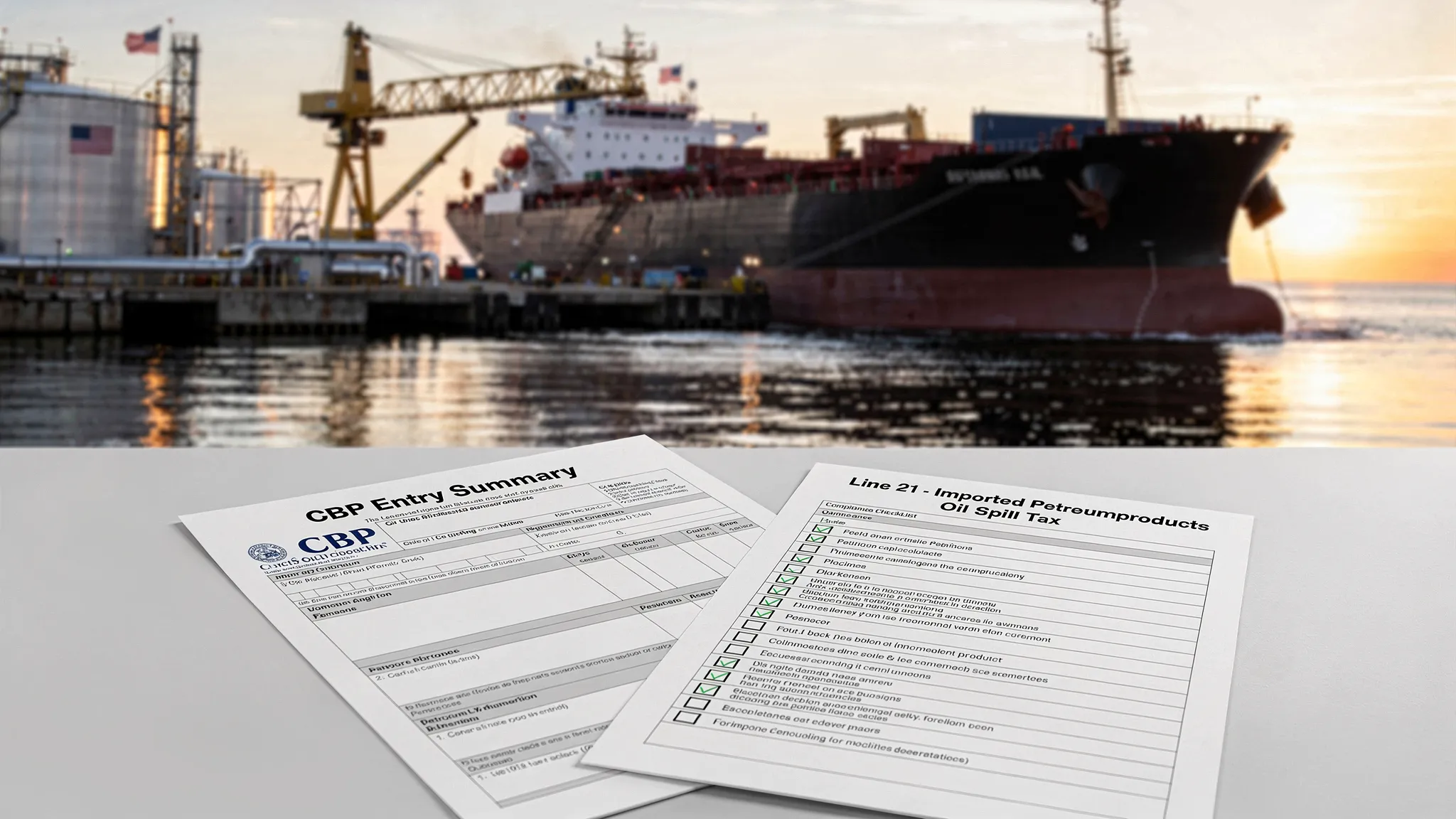
The importer of record generally owes the tax. Liability is tied to entry for consumption or withdrawal from warehouse for consumption in the United States. In practice, this means reconciling data from brokers, customs entry summaries, and terminal receipts.
The Oil Spill Liability Tax on Imports focuses on refined petroleum products crossing the border for U.S. consumption. Do not report the same barrels on the domestic crude line and the imported products line. The Imported Petroleum Products Oil Spill Tax (21) is the correct line for imported product volumes.
How to compute and report each quarter
- Aggregate the total barrels of imported petroleum products entered for consumption during the quarter.
- Apply the current statutory per-barrel rate.
- Subtract any allowable credits or exemptions, supported by entry and shipment documents.
- Report the liability on the Environmental Taxes section of quarterly form 720 and pay by the due date.
The Imported Oil Spill Tax IRS rules require accurate reconciliation to customs documentation. You will include the totals in the same Environmental Tax section that houses other excise categories. References to IRS Oil Spill Tax on Imported Petroleum in the instructions will outline rates and any temporary changes. Some filers refer to this category as the Petroleum Import Oil Spill Tax, but the governing rules are the same.

Exemptions, credits, and corrections
Certain exported volumes and other statutorily exempt uses may qualify for credits. Keep organized files with entry numbers, bills of lading, warehouse withdrawal documents, and any export proofs. If you discover an overpayment after filing, you can generally seek a credit or refund on a subsequent return or through a claim process, consistent with the instructions for your quarter.
Because this tax is part of the broader Environmental Tax framework on Form 720, ensure you classify each transaction correctly. Do not confuse this with Foreign Insurance Tax or other, unrelated excise items that also appear in Part II.
Recordkeeping and common pitfalls
Importers should be able to trace every reported barrel to customs and terminal documentation. Common pitfalls include:
- Double counting, for example, listing the same volume both as a domestic receipt and as an import.
- Using gallons or liters without converting and reconciling to barrels.
- Applying prior quarter rates rather than the current quarter’s rate.
- Reporting imported products on the wrong line. Use line 21 for the Imported Petroleum Products Oil Spill Tax (21).
Quick reference
| Item | Details |
|---|---|
| Who is liable | Importer of record |
| Taxable event | Entry for consumption or withdrawal from warehouse for consumption |
| Measure | Barrels of imported petroleum products |
| Where to report | Environmental Taxes on Form 720 Part II |
| Due dates | Quarterly return, due the last day of the month following the quarter end |
Conclusion
Accurate customs reconciliation, current rate verification, and organized records are essential for compliance with the Imported Petroleum Products Oil Spill Tax (21). Build a process that connects broker entries, terminal receipts, and your quarterly filing so that totals on the return are complete and supportable.
FAQs
Who is responsible for paying this tax on imports? The importer of record is generally liable when petroleum products are entered for consumption in the United States.
Is this tax paid to Customs or the IRS? It is an IRS excise tax reported on the quarterly Form 720, separate from customs duties.
How do I avoid double counting with domestic receipts? Imported products go on line 21, while receipts of domestic crude at a U.S. refinery go on line 18. Use documentation to assign each volume correctly.
What if I later export product that I reported as imported? You may be eligible for a credit or refund if statutory requirements are met. Keep export documents and follow the instructions for claims.
Do I need to make deposits during the quarter? Generally, environmental taxes in Part II are paid with the return. Review the current quarter’s instructions to confirm applicable rules.
This material is for general information only and does not constitute legal or tax advice. Always consult current IRS instructions and your adviser for guidance specific to your operations.