File your taxes IRS vs provider: Pros and cons
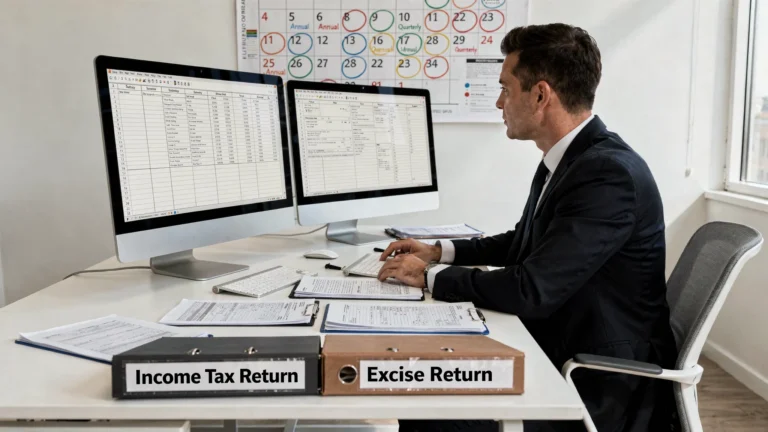
Choosing how to file federal excise taxes can feel like a fork in the road. Do you send a paper Form 720 straight to the IRS, or do you e-file through an IRS‑authorized provider? For Form 720 filers, the choice affects speed, accuracy, records, and the help you get if something goes wrong. Here is a practical comparison to help you decide what makes sense for your business this quarter.

Quick primer on Form 720 and 2026 timing
Form 720 is the quarterly federal excise tax return. It covers a wide range of excise taxes. The IRS lists who must file, what each part of the form covers, and the schedules required in the official Instructions for Form 720.
Key due dates are the last day of the month after each quarter ends. For this filing season, the fourth quarter return is due January 31, 2026. Subsequent quarters are due April 30, July 31, and October 31. Late filing or late payment may trigger penalties and interest, so aim to file and pay on time. The Instructions above provide specifics on penalties, deposits, and where to mail if you choose paper.
A crucial nuance for excise filers, the IRS accepts Form 720 electronically through the Modernized e-File system, but it does so via approved software and transmitters. In other words, there is no direct IRS web form for Form 720 similar to individual Free File. The IRS outlines this program at its Excise Tax e-File and Compliance Program.
Option 1: Filing directly with the IRS by paper
Some businesses prefer to complete Form 720 manually and mail it to the IRS. If you go this route, read the latest filing addresses and payment voucher guidance in the Instructions for Form 720.
Pros:
- No software or service fee.
- Works when internet access is limited.
- Full control over paper records and internal sign-off workflows.
Cons:
- Slower processing, since mail must be delivered and processed before the IRS can act.
- No electronic acknowledgment, you wait for correspondence or account updates to confirm processing.
- Greater risk of math and transposition errors that trigger notices, the IRS highlights that e-file includes validation checks that reduce common errors.
- You must track the correct mailing address and include the proper payment voucher if paying by check.
- Amending later can be more manual, you file a separate Form 720-X and manage paper records for each change.
Payment note: Whether you file on paper or electronically, you can often pay electronically using the Electronic Federal Tax Payment System. Many businesses prefer EFTPS for its scheduling and confirmation features. Learn more at EFTPS. You may also mail a check with voucher 720-V if permitted by the instructions.
Option 2: Filing with an IRS-authorized e-file provider
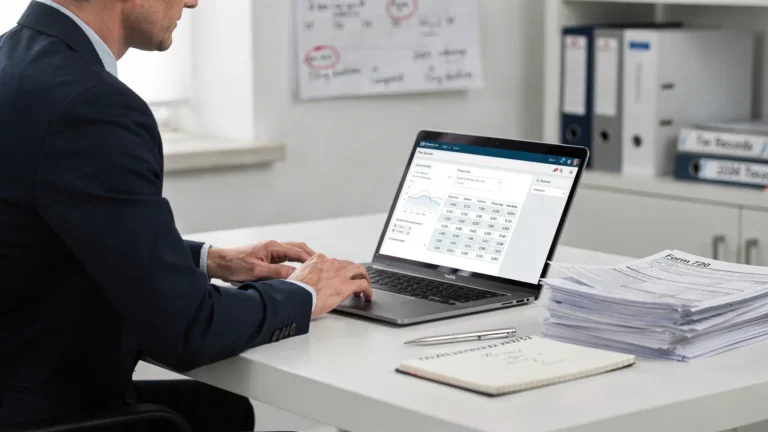
Authorized e-file providers deliver your return securely to the IRS through the Modernized e-File platform. You prepare the return in the provider’s system, pass built-in validations, then transmit. The IRS provides an electronic acknowledgment of acceptance or a notice of issues to correct.
Pros:
- Faster IRS acknowledgment, in most cases you receive acceptance confirmation far sooner than paper processing.
- Built-in validation that reduces common math and entry errors, which lowers the risk of notices and rework.
- Centralized digital records, easy retrieval for audits, amendments, and internal reviews.
- Guided workflows that align lines and schedules, which is useful when filing multiple excise categories.
- Customer support that understands Form 720 requirements and quarterly patterns.
- Clear paths for follow-on actions like Form 720-X amendments and Form 8849 claims when needed. See About Form 720-X and About Form 8849 for how these work with excise filings.
Cons:
- Provider fee, even if modest, is a factor in your cost-benefit analysis.
- You rely on a third party’s platform and uptime, so vendor due diligence is important.
- Learning curve if you file only once a year or if staff changes.
The IRS encourages electronic filing for business returns because of speed, accuracy, and acknowledgment benefits. See the IRS overview of e-file for business and self-employed taxpayers for general advantages of e-filing.
Paper IRS filing vs provider e-file at a glance
| Decision factor | Paper file with IRS | IRS-authorized e-file provider |
|---|---|---|
| Filing speed | Slower, depends on mail and manual processing | Faster, electronic transmission and acknowledgment |
| Error prevention | Manual checks only | Built-in validations reduce common errors |
| Proof of filing | Mail receipt or later IRS notices | Electronic acknowledgment from IRS |
| Records and audit trail | Physical files, manual organization | Digital history and quick retrieval |
| Amendments and claims | Prepare and mail separate forms | Many providers support 720-X and 8849 workflows |
| Payment options | EFTPS or check with voucher, per IRS rules | EFTPS or other IRS payment options, with provider guidance |
| Cost | Postage and internal admin time | Provider fee, often offset by time saved |
| Support | IRS instructions and phone lines | Provider support plus IRS guidance |
Which route fits your situation?
Choose paper filing if you have a very simple return, no urgency, and you prefer internal paper workflows. This is more common for low volume filers who are already comfortable with manual processes.
Choose an authorized provider if you want speed, fewer manual errors, and better audit readiness. This is especially helpful if you file multiple excise categories, expect to amend later, or want a repeatable quarterly process with staff turnover.
If you have a looming deadline, electronic filing is usually the safer path. For example, the Q4 2025 Form 720 that is due January 31, 2026, benefits from e-file acknowledgment, which reduces the uncertainty you might face with last minute mailings and potential delivery delays.
Compliance reminders for 2026
- Deadlines: Returns are due Jan 31, Apr 30, Jul 31, and Oct 31. The Instructions for Form 720 provide details on due dates and deposits for specific excise taxes.
- Payments: Use EFTPS or another IRS approved method. Do not wait to set up EFTPS if you are new, enrollment and verification can take time.
- Amendments: Use Form 720-X to correct a previously filed Form 720. Keeping a clean digital trail makes amendments smoother.
- Refund claims: Some overpayments are claimed on Form 8849. Check the instructions to determine when to use 8849 instead of 720-X.
This is general information. Discuss specific tax positions with your tax advisor, especially for complex product classifications, environmental taxes, or fuel-related schedules.
How eFileExcise720 supports Form 720 filers
If you decide a provider is right for your team, eFileExcise720 is built for federal excise filers and is authorized by the IRS to transmit Form 720.
- IRS-authorized e-filing, compliant transmission to the IRS for Form 720.
- Free account creation, you can set up an account and explore before you file.
- No software download needed, work securely in your browser.
- Personalized customer support, get help from people who know excise returns.
- Secure data protection, protect sensitive tax information end to end.
- Simple dashboard navigation, follow a clear process from start to finish.
- Supports all Form 720 categories, file across excise tax lines in one place.
- Assistance for various industries, aligned to the businesses that file Form 720.
- Form 720 amendments, prepare 720-X corrections when you need to fix a prior quarter.
- Form 8849 claims support, handle eligible refund claims tied to excise overpayments.
You can learn more or create your account at eFileExcise720.
A straightforward path to your next filing
Here is a simple way to approach your next quarter:
- Confirm your filing obligation and due date in the IRS Instructions for Form 720.
- Gather transaction data and documentation tied to each excise category you report.
- Decide on your filing route. If timeliness, acknowledgments, and digital records matter, plan to e-file with an authorized provider.
- If e-filing, set or confirm your EFTPS access so your payment is ready when you submit.
- Review and transmit. Keep your acknowledgment, payment confirmation, and a complete copy of the filed return for your records.
Bottom line
For Form 720, filing directly with the IRS means paper, slower processing, and more manual checks. Filing with an IRS-authorized provider delivers speed, validation, and reliable records, which typically reduces risk and saves time each quarter. If you are facing the January 31 deadline or you want to standardize your process for 2026, consider moving to e-file.
Get started today with an IRS-authorized platform designed for excise returns. Create your free account at eFileExcise720 and file your Form 720 online, fast and securely.