
IRS Frequently Asked Questions: Clear Answers for Filers
If you have ever searched “IRS frequently asked questions” while trying to stay compliant, you already know the problem: the IRS has a lot of guidance, but it is spread across instructions, publications, and topic pages. When you are filing a time-sensitive return like Form 720 (Quarterly Federal Excise Tax Return), you usually need a clear answer and the next step.
This guide pulls together the questions filers ask most often, with practical, IRS-aligned direction (and the right form or IRS page to check next). It is written for businesses and organizations that deal with federal excise tax reporting, including Form 720, Form 720-X amendments, and Form 8849 claims.
How to use IRS guidance without getting lost
When the IRS publishes FAQs, they are often meant to clarify a specific change or issue. For ongoing compliance, your most reliable sources are usually:
- The current-year form instructions (for Form 720, Form 720-X, Form 8849)
- IRS publications (especially for excise tax rules)
- IRS official tools (EFTPS for deposits, IRS Online Account for balances)
For excise tax, start with:
- IRS Form 720 and the latest instructions
- Publication 510 (Excise Taxes) for broader definitions and rules
A practical tip: always confirm you are reading the guidance for the correct tax year and quarter. Excise tax rates and rules can change, and the IRS sometimes updates instructions mid-year.
Do I need to file Form 720?
In general, you file Form 720 for any quarter in which you are liable for a tax reported on Form 720, or when you need to report specific credits/adjustments applicable to that quarter (per the form instructions). Liability is activity-based. It depends on what you sold, imported, manufactured, or provided, not just the type of business you are.
If you are unsure whether your activities trigger Form 720 filing, use two checkpoints:
- Identify the exact excise category and line your activity maps to (fuel, environmental, communications, air transportation, foreign insurance, PCORI fee, etc.).
- Confirm who the IRS treats as the liable party (seller, manufacturer, service provider, importer of record, first receiver, plan sponsor, and so on).
If you need a Form 720 refresher tailored to business filers, this site guide goes deeper without making you wade through the full instructions: Understanding Form 720 and how to file it.
When is Form 720 due?
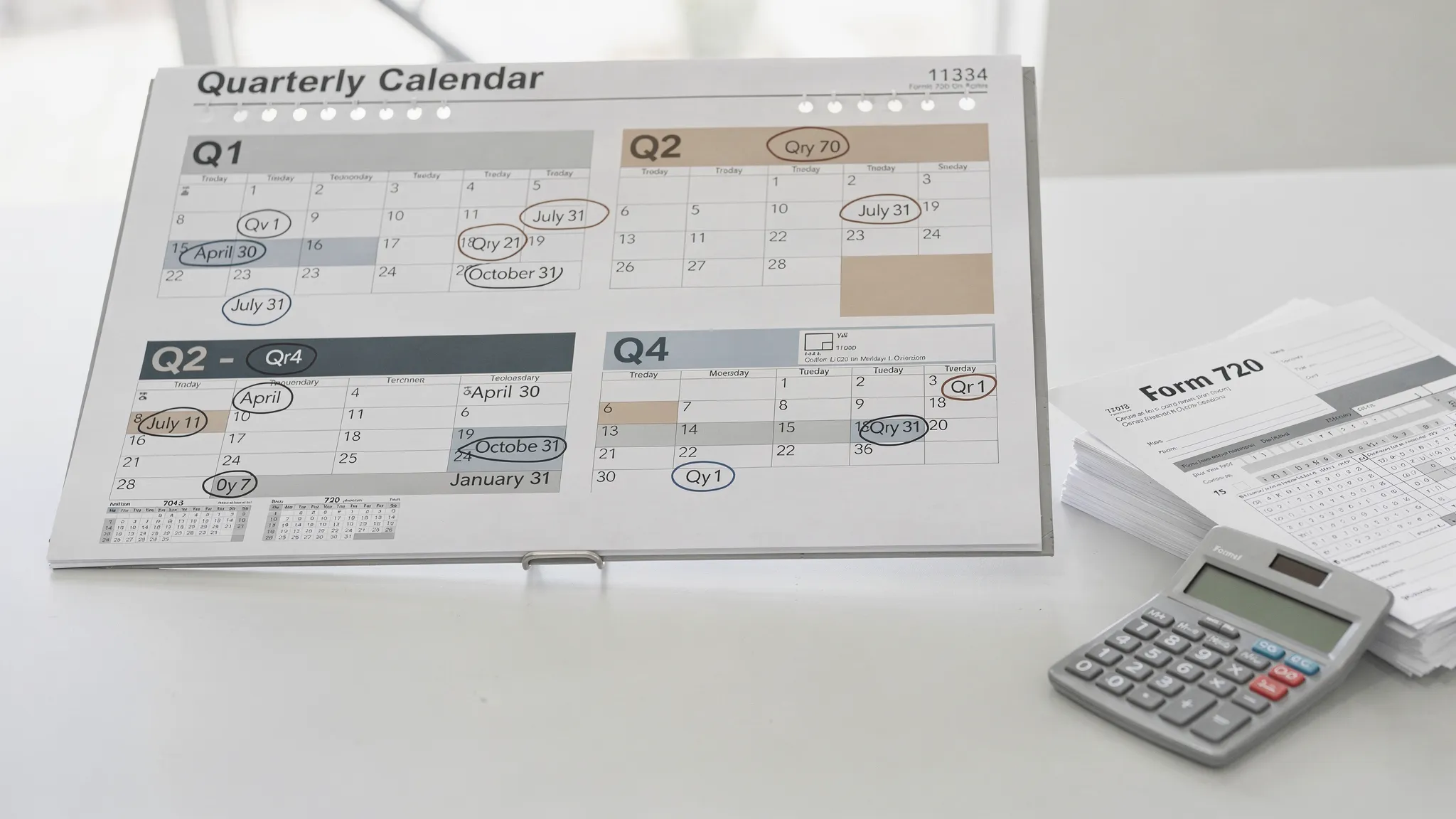
Form 720 is due quarterly. The standard due dates are:
| Quarter (Form 720) | Period covered | Due date (typical) |
|---|---|---|
| Q1 | Jan 1 to Mar 31 | April 30 |
| Q2 | Apr 1 to Jun 30 | July 31 |
| Q3 | Jul 1 to Sep 30 | October 31 |
| Q4 | Oct 1 to Dec 31 | January 31 |
If the due date falls on a weekend or legal holiday, the deadline generally shifts to the next business day.
For a dedicated due date explainer (including edge cases), see: Form 720 due date.
Is e-filing Form 720 better than mailing?
For most filers, e-filing is preferred because it reduces avoidable problems such as mailing delays, missing signatures, and manual processing backlogs. E-filing also typically provides faster confirmation that the IRS received the return.
Mailing can still be appropriate in certain situations (for example, if a specific attachment or scenario requires paper), but many businesses choose e-filing for consistency and traceability.
If you are deciding between both methods, compare the operational tradeoffs here: E-file IRS or mail: which is faster for Form 720?.
Do I need an EIN to file Form 720?
Most business excise filings use an Employer Identification Number (EIN). If you do not have one, review the IRS EIN guidance here: Apply for an EIN.
If your business information changes (name, address, responsible party), address that early. IRS notices and processing delays often trace back to mismatched entity information.
How do I pay Form 720 taxes, and when are deposits required?
Federal excise tax payments are commonly made through the Electronic Federal Tax Payment System (EFTPS): EFTPS.
A key point many filers miss: Form 720 can involve deposits during the quarter (not just payment when you file). Deposit requirements vary by excise tax type and liability amount.
As a general rule, if your excise tax liability is more than a small-balance threshold for the quarter, the IRS typically expects deposits rather than a single payment with the return. Always confirm the rule for your specific line item using the current Form 720 instructions.
If you are building an internal process, the goal is simple: do not wait until the filing deadline to discover you should have been depositing.
I filed, but I got an IRS notice. What should I do first?
Getting an IRS letter does not automatically mean you did something wrong. Notices are often triggered by mismatched amounts, missing schedules, payment timing issues, or classification differences (for example, the IRS thinks a payment should have been a deposit).
Before you respond, collect a clean “case file” for that quarter:
- A copy of the filed return and all attached schedules
- Proof of payments/deposits (EFTPS confirmations)
- Your workpapers showing how you computed the tax (volumes, units, invoices, import entries, coverage counts)
- Any prior correspondence for the same period
Then read the notice carefully for the tax period and the specific line or issue being questioned. If the notice is asking for a response by a deadline, do not ignore it.
For a penalties-focused explanation (useful if the notice involves late filing, late payment, or deposits), see: Form 720 late filing penalties explained (2026 guide).
How do I correct a mistake on Form 720?
Most Form 720 corrections are handled through Form 720-X (Amended Quarterly Federal Excise Tax Return). The reason to amend is usually one of these:
- You reported the tax on the wrong line or at the wrong rate
- You overstated or understated taxable quantities
- You missed a credit or reported a credit incorrectly
- You need to correct a prior quarter after reconciling source systems
If your “correction” is actually a refund claim (common with fuel-related claims or export situations), the better path may be Form 8849 rather than a 720-X.
A practical comparison is here: Form 720 vs Form 8849: what’s the difference?.
And if your main question is whether amendments can be submitted electronically, see: Can an amended return be e-filed?.
Should I use Form 8849, Form 720-X, or a credit on Form 720?
This is one of the most common “IRS frequently asked questions” patterns for excise tax filers, because the correct answer depends on the type of credit and timing.
Here is the practical way to think about it:
- Form 720-X is generally used to amend a previously filed Form 720.
- Form 8849 is generally used to claim refunds for certain excise taxes (often fuel-related), using the correct schedule.
- Form 720 Schedule C is where certain credits are claimed on the quarterly return, when allowed by the instructions.
If you choose the wrong path, your claim may be delayed, reduced, or returned for clarification.
If you want a map of the 8849 schedules and what they are for, start here: Form 8849 schedule types.
How long should I keep excise tax records?
Excise tax recordkeeping is not only about filing, it is about being able to prove how you computed the number on a specific IRS line. Keep source documentation that supports:
- Taxable vs non-taxable determinations
- Volumes/units and measurement method
- Customer exemptions (when applicable)
- Import and export support (when applicable)
- Payment and deposit confirmations
The IRS has general guidance on retention periods and why they vary by situation: IRS recordkeeping.
A conservative approach is to retain excise-related workpapers and source documents long enough to cover assessment periods and operational audits. When in doubt, align with your tax advisor’s retention policy.
How can I check my IRS balance or confirm payments?
For many businesses, the easiest starting point is the IRS online account experience (where available for your entity type and access method) and your EFTPS payment history.
Useful official starting points:
- Your IRS Online Account
- EFTPS payment confirmations and history
If you are reconciling a quarter, make sure you are matching the payment to the correct tax period and type. Misapplied payments can create confusing notices.
Where can I get help if I am stuck?
If your question is about how to interpret an excise rule (taxability, who is liable, which line applies), your best help is usually a qualified tax professional familiar with federal excise tax.
If your question is about filing mechanics, deadlines, or getting the return submitted correctly and on time, an IRS-authorized e-file provider can reduce the administrative burden.
eFileExcise720 is an IRS-authorized e-filing portal built for Form 720 and related excise filings. If you want a workflow that avoids paper delays and helps you handle filing, amendments (720-X), and claims (8849) in one place, you can start here: eFile Form 720 online.
A quick “best next step” guide for common IRS questions
| What you are trying to figure out | Best next step | What you will typically use |
|---|---|---|
| “Do I have to file Form 720?” | Identify the excise activity and match it to the correct Form 720 line | Form 720 instructions, Pub 510 |
| “When is it due?” | Confirm quarter and due date rules (weekends/holidays) | IRS Form 720 page, due date guidance |
| “How do I pay?” | Determine whether you owe deposits and pay via EFTPS | EFTPS, Form 720 instructions |
| “I made a mistake, how do I fix it?” | Decide whether it is an amendment vs a refund claim | Form 720-X, Form 8849 |
| “Why did I get an IRS notice?” | Reconcile return, deposits, and supporting calculations by quarter | Filed return, EFTPS records, workpapers |
The common theme behind most IRS questions is documentation. If your calculation is supportable, your quarter is correct, and your payments are properly matched, you are already ahead of most filing problems.
If you would rather file electronically with an IRS-authorized provider and reduce the risk of avoidable rejections, you can file your return through eFileExcise720 without downloading software and with access to customer support when questions come up.