
Retail Tax Filing in the US: Common Mistakes Retail Businesses Make and How to Avoid Them
Retail businesses are used to working on tight margins, fast inventory turns, and constant operational demands. But when it comes to retail tax filing in the US, even small errors can create outsized headaches, including IRS notices, penalties, interest, and time-consuming corrections.
In a federal context, retail-related tax compliance often includes federal excise tax for retailers, especially for businesses that sell fuel, handle certain regulated products, or engage in activities that trigger excise reporting. This article is educational (not legal or tax advice) and focuses on the most common filing mistakes retailers make and practical ways to avoid them.
What Is Retail Tax Filing?
“Retail tax filing” can mean different things depending on the tax being discussed. Most retailers think first about sales tax and income tax, but in a federal setting, retail tax filing often includes reporting and paying excise taxes tied to specific products or transactions.
For many retail operators, IRS retail tax filing becomes relevant when they sell or handle items that fall under federal excise tax rules (for example, certain fuels). These taxes are usually reported on periodic returns (often quarterly), and they are separate from your annual income tax return.
Retail tax filing vs. income tax (simple distinction)
- Income tax is based on profit (revenue minus expenses) and is generally filed annually.
- Excise tax filing for retail businesses is typically based on taxable units, transactions, or activities, and may be filed quarterly.
A retail business can be profitable and still get into trouble if its excise filings are late, incomplete, or misclassified.
Who Is Required to File Retail-Related Excise Taxes?
Not every retailer files federal excise returns, but certain business models commonly do.
Retailers that commonly encounter federal excise filing
- Gas stations and convenience stores selling gasoline or diesel.
- Truck stops and fleet-focused retailers dealing with higher-volume fuel activity.
- Retail businesses involved with specialized taxable products or services subject to federal excise rules.
Where Form 720 commonly fits
Many retail-related federal excise obligations are reported on the Quarterly Federal Excise Tax Return (often referred to as Form 720 retail filing). Some retailers may also need to correct prior filings or claim certain credits or refunds using related excise forms, depending on facts and eligibility.
For official definitions and categories, reference the IRS resources for excise taxes, including IRS Publication 510 (Excise Taxes) and the Form 720 information page.
Common Retail Tax Filing Mistakes
Retail excise tax compliance often breaks down in predictable ways: classification, timing, math, credits, and documentation. Below are the most frequent issues seen in retail excise tax filing.
| Common mistake | Why it happens | What it can lead to | Practical prevention step |
|---|---|---|---|
| Incorrect tax classification | Product rules are nuanced, staff changes, POS categories do not match IRS categories | Overpaying or underpaying excise tax, notices, amended returns | Map products and activities to excise categories and document the logic |
| Missing filing deadlines | Quarterly schedules are overlooked during busy seasons | Late filing penalties, late payment penalties, interest | Use recurring reminders and a compliance calendar, file early |
| Underreporting or overreporting | Manual calculations, incomplete transaction data, deposit mismatch | Balances due, refund delays, correspondence | Reconcile sales reports to tax calculations before submitting |
| Not claiming eligible credits or refunds | Lack of awareness, missing support docs | Paying more tax than necessary, cash flow strain | Review credit/refund rules each quarter, keep evidence |
| Filing without proper documentation | Records scattered across systems, weak retention practices | Audit risk, inability to substantiate positions | Centralize records and maintain consistent retention policies |
Incorrect Tax Classification
In retail tax filing, classification errors are common because retail operations often bundle many SKUs, vendor types, and transaction scenarios. If a taxable item is misclassified, the tax rate or category may be wrong, which can flow into an incorrect return.
Common drivers include:
- POS or accounting categories that were created for internal reporting, not tax reporting.
- Product changes or new suppliers without a compliance review.
- Staff turnover and inconsistent procedures.
A practical fix is to create a simple internal “taxability mapping” document that ties each relevant product or activity to the appropriate excise treatment, and to update it whenever offerings change.
Missing Filing Deadlines
Many federal excise returns are filed on a quarterly schedule, which makes them easy to forget compared to daily sales tax operations. Missing a deadline can trigger penalties and interest, even when the underlying tax is eventually paid.
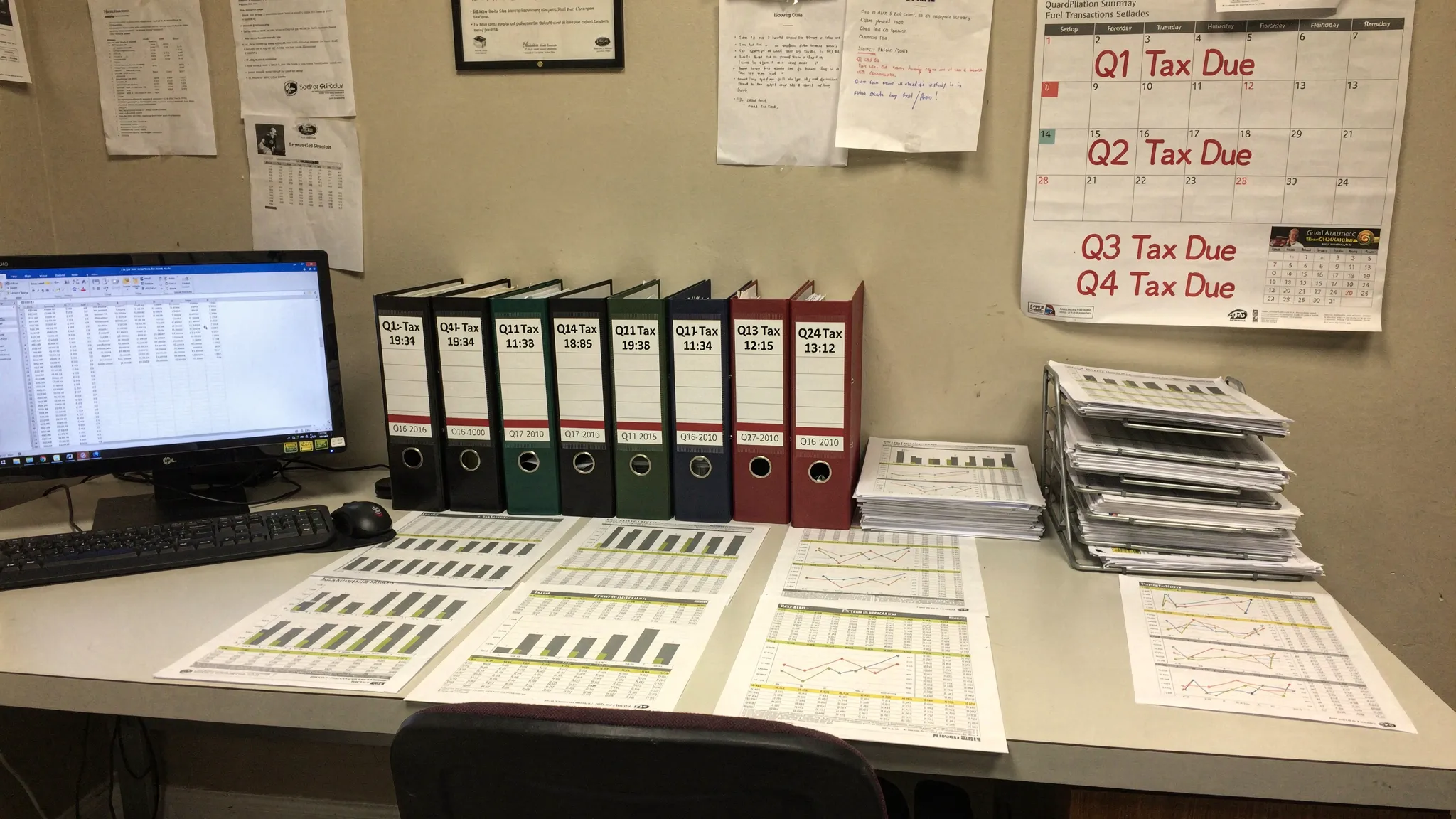
To reduce risk, treat excise deadlines like operational deadlines (similar to payroll): set internal cutoffs for pulling reports, reconciling totals, and submitting filings several days before the due date.
Underreporting or Overreporting Tax Amounts
Calculation problems usually come from process gaps, not bad intentions. Retailers commonly pull numbers from multiple places (POS reports, fuel system reports, invoices, and bank payments), then manually compile them. Mistakes happen when:
- A reporting period is off by a day or week.
- Returns are prepared from preliminary data.
- Deposits and reported liability are not reconciled.
Underreporting can create balances due and potential penalty exposure. Overreporting can hurt cash flow and often requires additional steps to recover funds.
Not Claiming Eligible Credits or Refunds
Some retailers may be eligible for excise credits or refunds in specific scenarios, but they miss them because the rules are not part of their routine workflow or because they lack supporting documentation.
For example, if a retailer later discovers an overpayment or needs to address a specific credit situation, there may be a need to amend a prior excise return or pursue a claim process, depending on eligibility and IRS requirements.
Because credit/refund rules can be fact-specific, it helps to review them as part of a quarterly close process, and to keep documentation that supports the position.
Filing Without Proper Documentation
In retail, documentation often lives in separate systems: POS, fuel management, invoice folders, bank feeds, and spreadsheets. During an IRS inquiry or audit, disorganized records can slow everything down.
A strong documentation approach is not complicated, but it should be consistent:
- Store reports, invoices, and reconciliation workpapers in a centralized folder.
- Retain copies of filed returns and acknowledgments.
- Keep notes explaining any unusual transactions or adjustments.
Consequences of Retail Tax Filing Errors
Mistakes in IRS retail tax filing can create a chain reaction that affects both compliance and operations.
Penalties and interest
Depending on the situation, filing and payment issues may result in penalties and interest that increase the total cost beyond the original tax.
IRS notices and follow-ups
Notices are often triggered by mismatches, late submissions, or missing information. Even when the issue is solvable, responding takes time, attention, and documentation.
Higher audit and review risk
Errors do not automatically mean an audit, but repeated problems, inconsistent reporting, or missing support can increase scrutiny.
Cash flow impact
Retail cash flow is sensitive. Overpayments tie up funds, and underpayments can create unexpected liabilities at inconvenient times.
How Retail Businesses Can Avoid These Mistakes
Avoiding retail excise issues is mostly about building a repeatable process.
- Clarify which excise categories apply to your products and activities, and document assumptions.
- Maintain accurate sales and transaction records, including period-end reconciliation.
- Track deadlines with a quarterly compliance calendar and internal cutoffs.
- Use a reliable, purpose-built filing method to reduce manual entry and missed steps.
- Seek professional assistance when the business changes, such as adding fuel products, expanding locations, or changing suppliers.
How Professional Retail Tax Filing Support Helps
Professional support can reduce the day-to-day burden on owners and managers while improving consistency.
In practice, retail tax filing support often helps with:
- Cleaner classification and more reliable calculations.
- On-time filing workflows.
- Reduced compliance risk through better documentation and reconciliation.
- Guidance on corrections if a filing needs to be amended.
If you want help streamlining your process, explore professional retail tax filing services designed for retailers that need a clearer, more consistent approach to excise reporting.
Why efileexcise720 Is a Reliable Choice for Retail Tax Filing
Retail operators typically want three things from a filing solution: accuracy, speed, and support. eFileExcise720 is built around those practical needs, with a focus on excise returns.
Fact-based reasons many retailers choose an online platform like eFileExcise720 include:
- IRS-authorized e-filing for excise returns.
- Secure online filing with data protection measures.
- A simplified online process with dashboard-based navigation.
- Support for common excise workflows, including corrections (amendments) and certain claim scenarios when applicable.
- Customer support to help users move through the filing process with fewer back-and-forth delays.
Conclusion
Accurate retail tax filing is an essential part of running a compliant retail operation, especially for businesses handling fuel or other excise-triggering products. Most costly errors come down to a few repeatable issues: misclassification, missed deadlines, calculation mismatches, missed credits, and weak documentation.
Retailers who build a quarterly compliance routine and use reliable filing support can reduce surprises, protect cash flow, and spend less time fixing preventable problems.
Frequently Asked Questions
What is retail tax filing in the US? Retail tax filing commonly refers to a retailer’s tax compliance obligations. At the federal level, it can include excise tax reporting tied to specific products or transactions, separate from income tax.
Do gas stations and convenience stores need to file federal excise taxes? Some do, especially when they sell taxable fuels or engage in activities that trigger federal excise reporting. Requirements depend on facts and the types of products sold.
What is the most common mistake in retail excise tax filing? Misclassification and mismatched numbers are common, often driven by POS category setups, manual calculations, and incomplete reconciliation.
Can I fix a mistake after filing an excise return? In many cases, yes. Corrections may require an amendment or a claim process depending on the situation. Keeping documentation makes corrections far easier.
Call to Action (CTA)
Need help with retail tax filing? File accurately and on time with eFileExcise720.
Get started here: Retail tax filing support