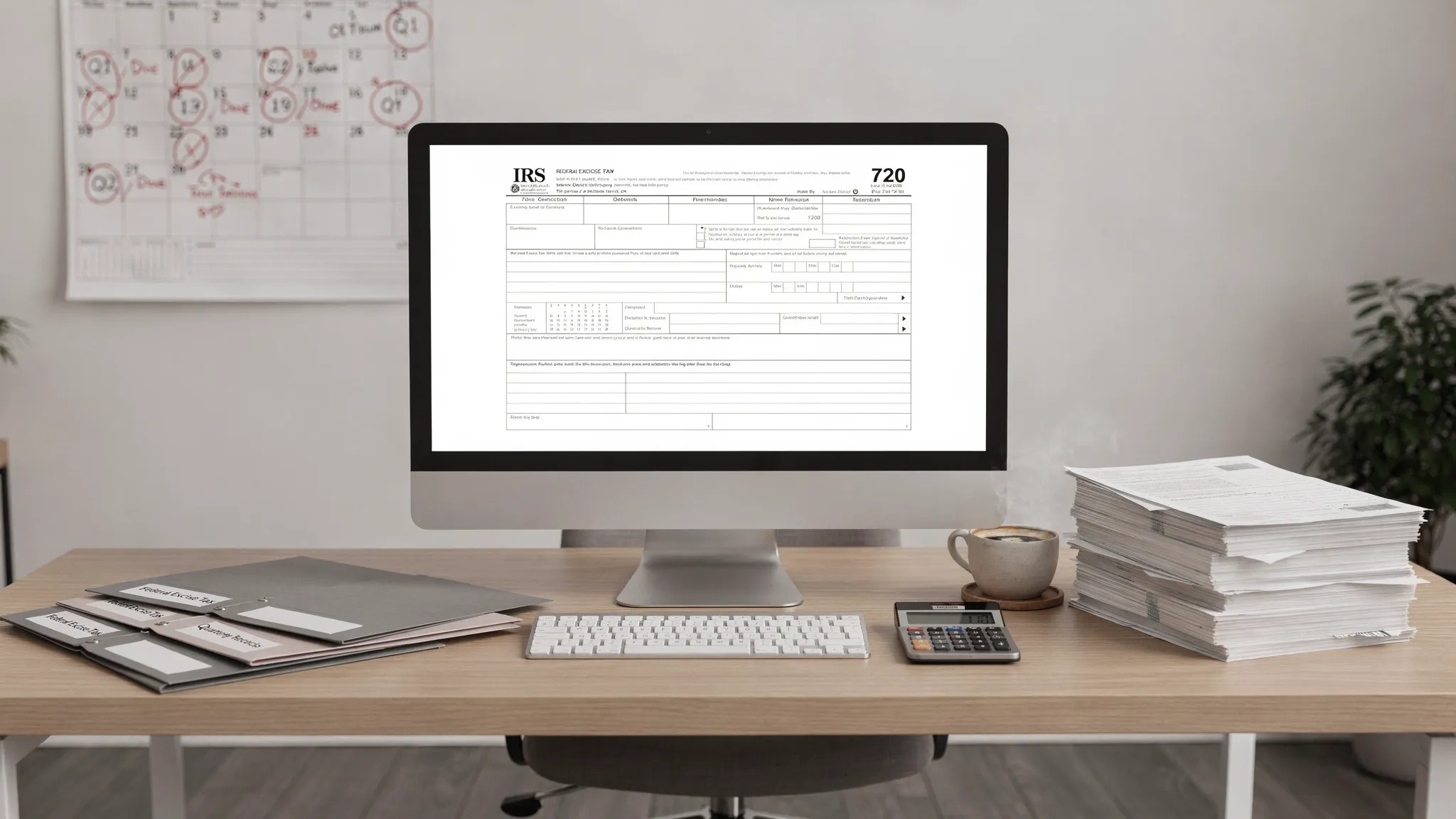
Federal Excise Tax Form 720 Explained Simply
Federal excise tax can feel confusing because it is not one single tax. It is a group of targeted federal taxes that apply to specific products, services, and business activities. The form that brings many of those taxes together is IRS Form 720, officially called the Quarterly Federal Excise Tax Return.
In plain English, Federal Excise Tax Form 720 is the return businesses use to report and pay certain federal excise taxes to the IRS. If your company sells, imports, manufactures, insures, transports, fuels, or provides certain taxable goods or services, Form 720 may be part of your compliance routine.
This guide explains the form simply, without tax jargon, so you can understand what it does, who files it, when it is due, and how to avoid common filing mistakes.
What Is Federal Excise Tax Form 720?
IRS Form 720 is a federal tax return used to report excise taxes. Unlike income tax, which is based on profit, excise tax is usually tied to a specific transaction, product, unit, service, or activity.
For example, a business might owe federal excise tax because it sells certain fuels, provides indoor tanning services, issues or sponsors certain health plans subject to the PCORI fee, pays premiums to foreign insurers, or deals with taxable chemicals or petroleum products.
The IRS provides the official form and instructions on its About Form 720 page. The detailed line-by-line rules are available in the IRS Instructions for Form 720.
A simple way to think about it is this: Form 720 is not asking whether your business made money. It is asking whether your business had any activity that Congress has decided should carry a specific federal excise tax.
Who Needs to File Form 720?
Form 720 filing is based on activity, not just business size or entity type. A small LLC, large corporation, nonprofit, partnership, sole proprietorship, or employer plan sponsor could have a filing obligation if it engages in a taxable activity.
Common Form 720 filers include businesses involved in:
- Fuel production, distribution, importation, or certain fuel uses
- Petroleum products, oil spill liability taxes, or environmental excise taxes
- Air transportation services or taxable communications services
- Indoor tanning services
- Foreign insurance premiums covering U.S. risks
- Manufacturing or selling certain taxable products
- Self-insured health plans that owe the PCORI fee
- Certain claims, adjustments, or credits connected to excise tax reporting
Not every business in these industries automatically owes tax. The exact filing requirement depends on your role in the transaction, the product or service involved, exemptions, tax rates, and timing. When in doubt, review the IRS instructions or work with a qualified tax professional.
What Types of Taxes Are Reported on Form 720?
Form 720 covers many excise tax categories. That is one reason it can look intimidating at first. The key is to identify only the lines that apply to your business. Most filers do not complete every section.
| Category | Plain-English Meaning | Common Filing Trigger |
|---|---|---|
| Fuel and petroleum taxes | Taxes on certain fuels, petroleum products, and related transactions | Selling, producing, importing, or using taxable fuels in specific ways |
| Environmental taxes | Taxes tied to certain chemicals, petroleum, ozone-depleting chemicals, or imported substances | Manufacturing, importing, or selling taxable substances |
| Communications and air transportation taxes | Taxes on certain communications or transportation services | Providing taxable services or collecting tax from customers |
| Retail or manufacturer taxes | Taxes on certain products sold by manufacturers or retailers | Selling taxable articles such as specified heavy vehicles or other listed goods |
| Foreign insurance tax | Tax on premiums paid to foreign insurers for certain U.S. risks | Paying or handling taxable insurance premiums |
| Indoor tanning tax | Tax on amounts paid for indoor tanning services | Operating a taxable indoor tanning business |
| PCORI fee | Fee reported by certain health insurers and self-insured plan sponsors | Sponsoring or issuing applicable health coverage |
This table is only a practical summary. The form has specific lines, definitions, and exceptions, so always match your business activity to the current IRS instructions before filing.
How Form 720 Is Organized
Form 720 is easier to understand when you know the purpose of each major section. The exact layout can change, but the general structure is consistent.
| Form Area | What It Does | Why It Matters |
|---|---|---|
| Part I | Reports many excise taxes that may also require deposits | Often used for fuel, environmental, communications, and transportation taxes |
| Part II | Reports additional excise taxes generally handled differently from Part I taxes | Often includes categories such as PCORI, foreign insurance, and indoor tanning |
| Part III | Summarizes total tax, claims, deposits, and balance due | Helps reconcile what you owe with what you already paid |
| Schedule A | Breaks down tax liability by semi-monthly period for certain taxes | Important for deposit tracking and avoiding deposit penalties |
| Schedule C | Reports certain claims that can reduce tax due on the return | Useful when you have qualifying credits or adjustments |
| Schedule T | Reports two-party exchange information for certain fuel transactions | Applies only to specific fuel-related situations |
| Form 6627 | Used for certain environmental taxes | Often required when reporting environmental excise tax categories |
A common mistake is assuming Form 720 is just one page of totals. In reality, the supporting schedules can matter as much as the main form. If a required schedule is missing or inconsistent, the return may be delayed, rejected, or questioned.
When Is Form 720 Due?
For most Form 720 categories, the return is filed quarterly. The standard rule is that Form 720 is due by the last day of the month following the end of the quarter. If the due date falls on a weekend or federal holiday, the deadline moves to the next business day.
For 2026 quarterly periods, the general due dates are:
| Quarter | Period Covered | General 2026 Due Date |
|---|---|---|
| 1st Quarter | January 1 to March 31 | April 30, 2026 |
| 2nd Quarter | April 1 to June 30 | July 31, 2026 |
| 3rd Quarter | July 1 to September 30 | November 2, 2026 |
| 4th Quarter | October 1 to December 31 | February 1, 2027 |
Some excise taxes also have deposit requirements before the return due date. That means filing Form 720 on time does not always mean you paid on time. Many businesses use the Electronic Federal Tax Payment System to make federal tax deposits and payments.
Form 720 vs. Paying the Tax: What Is the Difference?
This point causes confusion for many first-time filers. Filing Form 720 and paying the tax are related, but they are not always the same action.
Form 720 tells the IRS what excise tax you owe for the quarter. Payment or deposit activity tells the IRS how much money you have already sent in. Some filers pay with the return, while others must make deposits during the quarter and then reconcile everything on Form 720.
If your business owes a tax that requires semi-monthly deposits, missing those deposits can lead to penalties even if the quarterly return is filed by the deadline. The best practice is to review deposit rules before the quarter begins, not right before the return is due.
A Simple Filing Process for Form 720
You do not need to understand every excise tax category to file correctly. You need to understand the categories that apply to your business and keep clean records for them.
A practical Form 720 workflow looks like this:
- Identify your taxable activities: Review your products, services, imports, insurance payments, fuel transactions, health plan obligations, and other excise-related activities for the quarter.
- Match each activity to the correct Form 720 line: Use the IRS instructions to identify the correct tax number, line, rate, and schedule requirements.
- Gather your records: Collect invoices, sales reports, gallons or units, premiums, plan participant counts, customs records, deposit confirmations, and exemption documentation.
- Calculate the tax: Apply the correct rate or fee to the correct tax base, then verify your math against supporting documents.
- Complete required schedules: Add Schedule A, Schedule C, Schedule T, Form 6627, or other supporting information when required.
- File and keep proof: Submit the return, confirm IRS acceptance when e-filing, save payment records, and store your documentation for future review.
For a more detailed year-specific preparation list, see the Form 720 e-filing checklist for 2026.
What Records Should You Keep?
Good records are the foundation of Form 720 compliance. The IRS does not simply want a number on a line. It expects you to support how you calculated that number.
Useful records often include sales invoices, customer exemption certificates, import documents, bills of lading, gallons or unit measurements, insurance premium records, health plan covered-life calculations, deposit confirmations, and prior quarter filings.
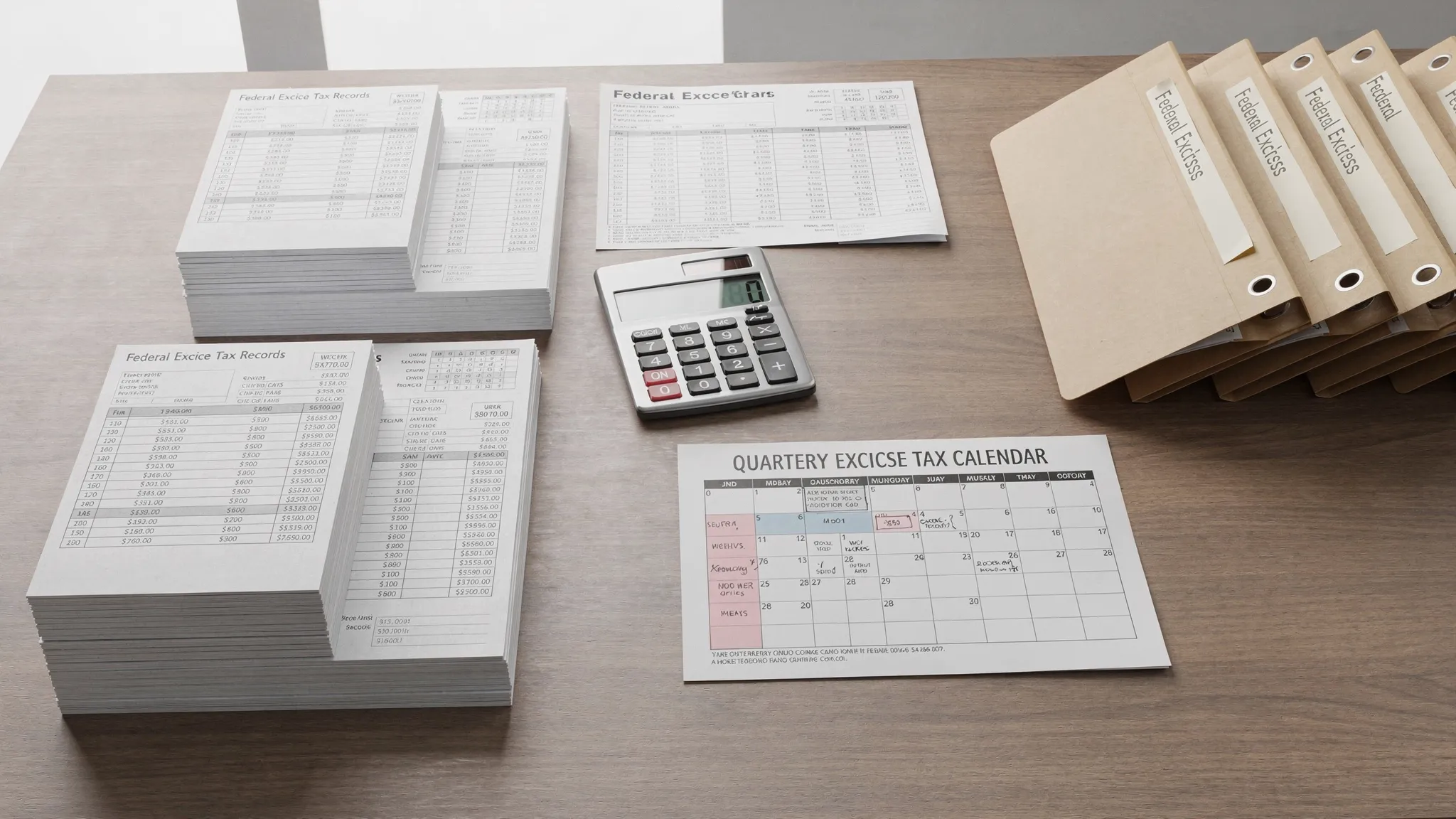
For recurring filers, it helps to build a quarterly excise tax folder. Each quarter should show what was reviewed, what was taxable, what was exempt, what was deposited, what was filed, and who approved the return. This makes future amendments, audits, and refunds much easier to manage.
What If You Made a Mistake on Form 720?
Mistakes happen, especially when businesses are filing Form 720 for the first time or adding a new taxable activity. The correction path depends on what went wrong.
If you need to correct a previously filed Form 720, you may need Form 720-X, Amended Quarterly Federal Excise Tax Return. If you are seeking a refund or credit of certain excise taxes, Form 8849 may be the correct route instead. The two forms are not interchangeable.
If you are unsure which path applies, review this comparison of Form 720 vs. Form 8849. Choosing the wrong form can delay a correction or refund.
Common Form 720 Mistakes to Avoid
Many Form 720 problems are preventable. The form itself is complex, but the most common errors usually come from process gaps rather than impossible tax rules.
Watch out for these issues:
- Treating state or local excise tax filing as a substitute for federal Form 720
- Reporting the wrong quarter or using the wrong period for source data
- Forgetting that some categories require deposits before the quarterly deadline
- Using gross revenue when the tax should be based on units, gallons, premiums, or another tax base
- Missing required schedules or attachments, especially for environmental or fuel categories
- Claiming an adjustment or refund on the wrong form
- Failing to file a required zero liability return when your filing obligation continues
- Waiting until the due date to determine whether your activity is taxable
Late filing, late payment, and deposit errors can create penalties and interest. For more detail, review this guide to Form 720 penalties and interest.
Do You Need to File If You Owe Zero Tax?
Possibly. If your business has an ongoing Form 720 filing obligation, there may be quarters when you have no tax due but still need to file a zero liability return. This can happen when a business continues to operate in a taxable category but has no taxable transactions for a specific quarter.
The safest approach is to confirm your filing status instead of assuming that zero tax means no return. If this applies to you, see the guide on how to file a Form 720 zero liability return online.
Why Businesses E-File Form 720
Paper filing is still an option in some cases, but e-filing is often faster and easier to manage. Electronic filing can help reduce manual errors, provide quicker submission confirmation, and create a clearer filing record.
eFileExcise720 is an IRS-authorized online platform built to simplify Form 720 filing. Businesses can create an account for free, file without downloading software, navigate a simple dashboard, and get personalized customer support when they need help. The platform supports Form 720 categories, Form 720-X amendments, and Form 8849 claims support, with secure data protection throughout the process.
E-filing does not eliminate the need for accurate records or correct tax calculations. It does, however, make the filing process more organized and less stressful, especially for businesses that file every quarter.
Frequently Asked Questions
What is Federal Excise Tax Form 720 used for? Federal Excise Tax Form 720 is used to report and pay certain federal excise taxes to the IRS. It covers many categories, including fuel, environmental taxes, indoor tanning, foreign insurance, communications, air transportation, and PCORI fees.
Is Form 720 filed annually or quarterly? Most Form 720 filers submit the return quarterly. The general due date is the last day of the month after the quarter ends, adjusted for weekends and federal holidays. Some categories, such as PCORI fees, have special timing rules.
Who is responsible for filing Form 720? The responsible party depends on the tax category. It may be a manufacturer, importer, retailer, service provider, insurer, plan sponsor, fuel business, or another business involved in a taxable activity.
Can Form 720 be filed online? Yes. Businesses can e-file Form 720 through an IRS-authorized e-file provider. E-filing can provide faster processing, electronic acknowledgement, and a more organized filing experience than paper filing.
What happens if I file Form 720 late? Late filing or late payment can lead to IRS penalties and interest. Some taxes also have deposit rules, so a business may face deposit penalties even if the quarterly return is submitted on time.
What is the difference between Form 720-X and Form 8849? Form 720-X is generally used to amend a previously filed Form 720. Form 8849 is generally used to claim refunds or credits for certain excise taxes. The correct form depends on the type of correction or claim.
File Form 720 Online With Less Stress
Form 720 is manageable when you break it into three questions: What taxable activity occurred, what line does it belong on, and what records support the calculation?
If you are ready to file, eFileExcise720 can help you submit your federal excise tax return through an IRS-authorized online portal. Create your account for free, complete your return without software downloads, and get support when you need it.
Start filing Form 720 online with eFileExcise720. This article is general information and not tax advice, so consider consulting a tax professional for complex filing situations.