Which Form of Taxes Applies to Your Excise Activity?
Excise taxes are activity-based. That means the right tax form depends less on your business label and more on the specific transaction, product, service, or use that triggered the tax.
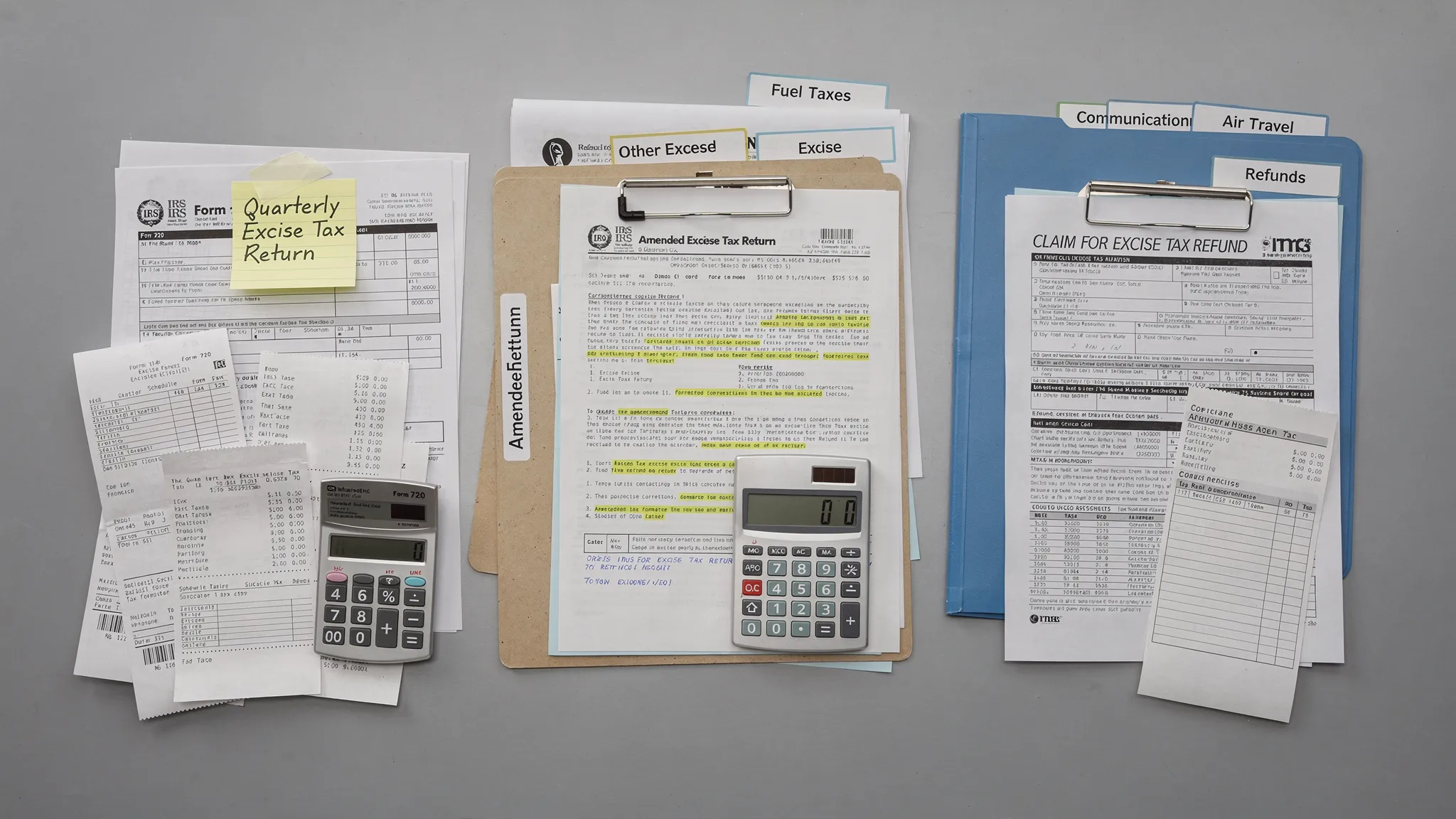
For many businesses, the answer is IRS Form 720, the Quarterly Federal Excise Tax Return. But Form 720 is not the only form connected to excise activity. A refund claim, an amended return, an environmental tax attachment, or a heavy vehicle use tax filing may point you to a different IRS form.
This guide walks through how to identify which form applies, when Form 720 is required, and when a related form such as Form 8849, Form 720-X, Form 6627, Form 6197, Form 4136, or Form 2290 may be the better fit.
Start with the excise activity, not the business type
A common mistake is assuming excise tax filing depends only on the industry you operate in. Industry matters, but the IRS generally looks at the taxable activity.
For example, a fuel distributor, a manufacturer, a communications provider, an importer, a health plan sponsor, and an indoor tanning salon can all have federal excise tax responsibilities. Their filing obligations are different because their taxable events are different.
Before choosing a form, identify three things:
- What happened? You sold, imported, manufactured, provided, used, or paid for something subject to federal excise tax.
- Who is liable? The party responsible may be the seller, manufacturer, importer, insurer, plan sponsor, or user, depending on the tax.
- What are you trying to do? Reporting current tax, correcting a past return, claiming a refund, or filing a separate excise return may require different forms.
The IRS publishes the official Instructions for Form 720, which should be your source for current line references, rates, and category-specific rules.
Quick guide: which form applies to your excise activity?
Use this table as a starting point. It does not replace IRS instructions or professional tax advice, but it can help you narrow the correct filing path.
| Situation or activity | Likely form | What it is used for |
|---|---|---|
| Reporting quarterly federal excise taxes on fuel, environmental taxes, communications, air transportation, certain manufacturers taxes, indoor tanning, or similar categories | Form 720 | Reports and pays current federal excise tax liabilities |
| Paying the PCORI fee for a self-insured health plan or applicable HRA | Form 720 | Reports the annual PCORI fee, generally on the second-quarter Form 720 due July 31 |
| Reporting environmental excise taxes that require detailed computation | Form 720 with Form 6627 | Form 6627 supports environmental tax calculations attached to Form 720 |
| Computing gas guzzler tax on certain automobiles | Form 720 with Form 6197 | Form 6197 helps calculate gas guzzler tax reported with Form 720 |
| Correcting an excise tax liability previously reported on Form 720 | Form 720-X | Amends a previously filed quarterly excise tax return |
| Claiming a refund of certain excise taxes, often fuel-related | Form 8849 | Requests a refund using the applicable Form 8849 schedule |
| Claiming certain fuel tax credits on an income tax return | Form 4136 | Claims eligible fuel credits as part of an income tax filing |
| Reporting heavy highway vehicle use tax | Form 2290 | Separate annual excise tax filing for taxable heavy highway vehicles |
| Alcohol, tobacco, and certain other regulated products | TTB or other specialized forms may apply | These may be administered outside the Form 720 process |
When Form 720 is the right form of taxes for your activity
Form 720 is the main federal form of taxes for many excise activities. It is filed quarterly and covers a wide range of tax categories. If your business collects, incurs, or is responsible for a federal excise tax listed on Form 720, this is usually where the liability is reported.
Common Form 720 categories include:
- Fuel-related excise taxes, including certain gasoline, diesel, kerosene, LPG, and alternative fuel situations
- Environmental taxes, including petroleum, certain chemicals, and ozone-depleting chemicals
- Communications and air transportation excise taxes
- Certain manufacturers taxes, such as sport fishing equipment, bows, arrow components, vaccines, and other listed items
- Retail taxes, including the indoor tanning services tax
- Foreign insurance excise tax
- The PCORI fee for applicable self-insured health plans and certain HRAs
Form 720 has quarterly due dates: April 30, July 31, October 31, and January 31 for the preceding calendar quarter. If a deadline falls on a weekend or federal holiday, the due date generally moves to the next business day.
Some Form 720 taxes also have deposit requirements through EFTPS. The deposit rules do not apply the same way to every excise category, so confirm whether your tax is subject to semi-monthly deposits or can be paid with the return. The Electronic Federal Tax Payment System is the standard system businesses use for federal tax deposits.
If you already know you need Form 720, a preparation checklist can help you avoid missing category details, schedules, or payment timing. See this related guide: Form 720 e-filing checklist for 2026.
When a Form 720 attachment is required
Some excise activities are reported on Form 720 but require an additional IRS form or schedule to support the calculation.
Form 6627 for environmental taxes
Form 6627 is used to calculate certain environmental taxes and is generally attached to Form 720 when required. This can apply to activities involving taxable chemicals, imported chemical substances, petroleum-related environmental taxes, or ozone-depleting chemicals.
The key question is not simply whether your company is “environmental” or “industrial.” The question is whether you manufactured, imported, sold, used, or entered into another taxable event involving a listed substance or product.
Because environmental tax calculations can depend on product classification, quantity, and tax rates, companies should keep strong records such as bills of lading, import documentation, inventory reports, production reports, and sales invoices.
Form 6197 for gas guzzler tax
Form 6197 is used to figure the gas guzzler tax for certain automobiles. The tax is connected to fuel economy ratings and applies in specific manufacturing or import situations. If your activity falls into this area, Form 6197 supports the computation while Form 720 is used to report the tax.
For many filers, the important takeaway is this: attachments do not replace Form 720. They support the Form 720 filing when the IRS needs additional calculation details.
When Form 8849 applies instead of Form 720
Form 720 is primarily for reporting and paying excise tax. Form 8849 is primarily for claiming a refund of certain excise taxes.
This distinction matters. If your business owes current-quarter excise tax, you usually look to Form 720. If your business already paid excise tax and later qualifies for a refund, you may need Form 8849 and the correct schedule.
Common Form 8849 scenarios include certain fuel tax refund claims, such as tax-paid fuel used for qualifying exempt purposes. These claims often require detailed documentation showing the gallons purchased, tax paid, use of the fuel, dates, and supporting invoices or logs.
For a deeper comparison, see Form 720 vs Form 8849: What’s the Difference? or review the Form 8849 schedule types.
When Form 720-X applies
Use Form 720-X when you need to amend a previously filed Form 720. This may happen when your business discovers that a prior quarter included an incorrect amount, missed tax category, wrong quantity, or calculation error.
Examples include:
- A fuel quantity was reported in the wrong quarter.
- A taxable sale was omitted from the original Form 720.
- An environmental tax calculation used incorrect product data.
- A tax category was selected incorrectly.
Do not assume every correction belongs on Form 720-X. In some cases, refund claims may belong on Form 8849 or another procedure. The right correction method depends on the tax category, the type of error, and whether you are increasing liability, reducing liability, or claiming a refund.
When another excise form may apply
Not every federal excise tax runs through Form 720.
A major example is the heavy highway vehicle use tax. If your business operates taxable heavy vehicles on public highways, you may need Form 2290 rather than Form 720. Form 2290 is a separate excise tax return with its own filing rules.
Alcohol and tobacco taxes are another area where specialized federal rules and forms may apply. Depending on the product and activity, businesses may interact with the Alcohol and Tobacco Tax and Trade Bureau rather than using Form 720.
State and local excise taxes are also separate. A business may have both federal Form 720 responsibilities and state-level fuel, tobacco, cannabis, communications, lodging, rental car, or other excise obligations. Filing a federal excise form does not automatically satisfy state requirements.
Five questions to choose the correct form
If you are unsure which form applies, walk through these questions before filing.
- Is the activity listed in the Form 720 instructions? If yes, Form 720 is likely the starting point for current liabilities.
- Are you reporting tax owed or claiming money back? Tax owed usually points to Form 720. Refunds often point to Form 8849 or, in some fuel credit cases, Form 4136.
- Is this a correction to a previously filed Form 720? If yes, review whether Form 720-X is the correct amendment route.
- Does the tax category require supporting calculations? Environmental taxes may require Form 6627, and gas guzzler tax may require Form 6197.
- Is the activity outside Form 720? Heavy vehicle use tax, alcohol, tobacco, and state excise taxes may require separate forms.
This process helps prevent a common compliance problem: filing the right tax amount on the wrong form, or filing the right form without the required schedule.
Practical examples
A self-insured employer calculating the PCORI fee will generally report and pay the fee on Form 720. Even though Form 720 is a quarterly excise return, the PCORI fee is typically filed annually on the second-quarter return due July 31.
A company importing petroleum products may have an environmental excise tax obligation reported on Form 720. Depending on the specific tax, supporting records may include customs documentation, entry summaries, product quantities, and inventory records.
A landscaping company that paid federal tax on fuel later used in qualifying off-highway equipment may not be reporting a current liability. It may instead be looking at a refund or credit route, such as Form 8849 or Form 4136, depending on the facts.
A business that filed Form 720 last quarter and later found it underreported taxable sales should review Form 720-X. If the issue is an overpayment or refund claim, it should confirm whether Form 8849 or another process applies instead.
A trucking company operating heavy vehicles on public highways should not assume Form 720 applies just because the tax is called an excise tax. Heavy highway vehicle use tax generally uses Form 2290.
Records you should gather before filing
Choosing the correct form is only part of the process. You also need records that support the amount reported or claimed.
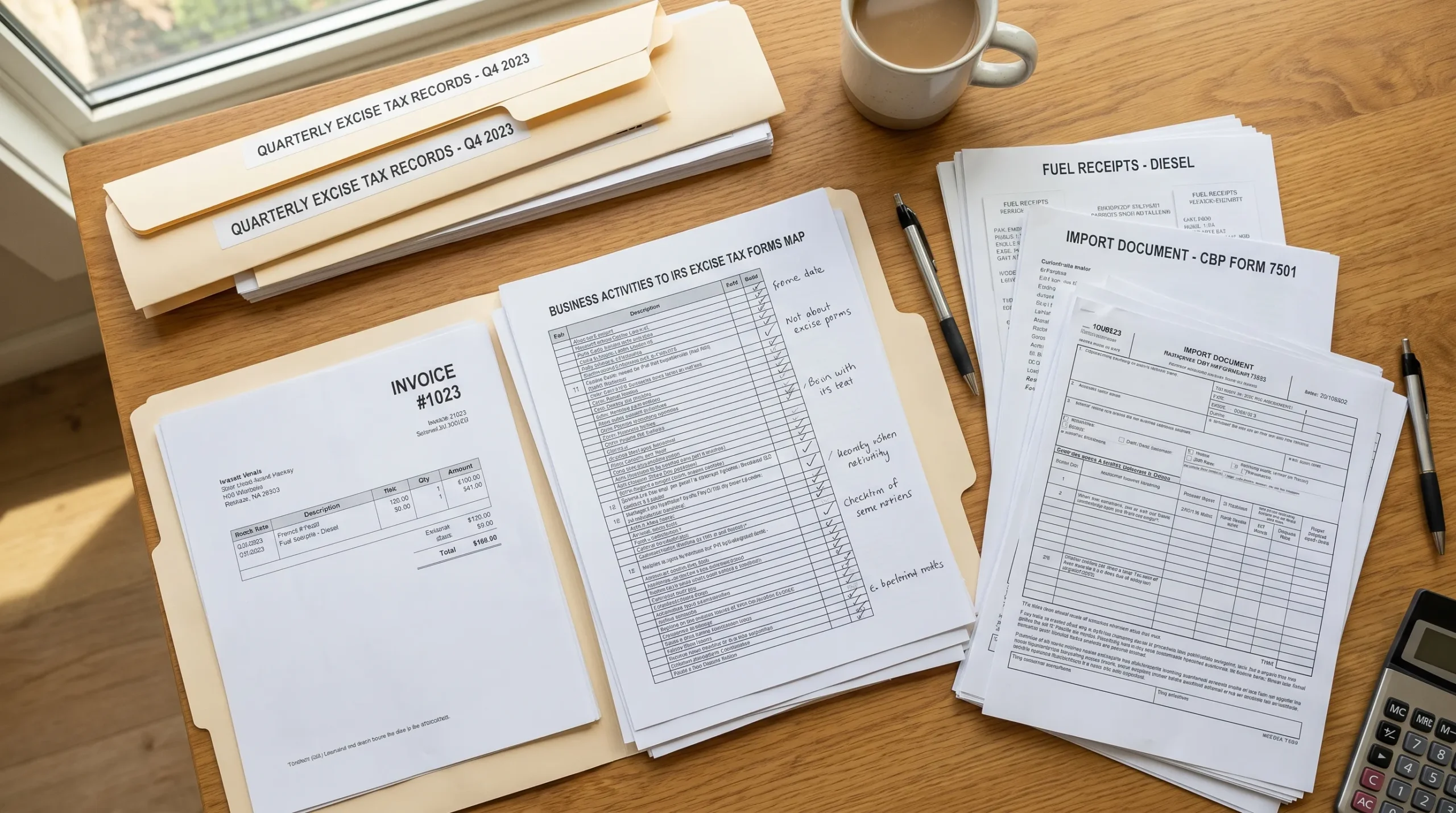
Helpful documentation may include sales invoices, exemption certificates, fuel purchase receipts, import records, production reports, inventory records, mileage or usage logs, insurance policy records, health plan covered-life calculations, prior returns, and proof of deposits or payments.
Keep records organized by quarter and by tax category. If your business has multiple excise activities, do not combine them into one informal total without a supporting workpaper. The IRS form structure is category-specific, and your records should be too.
How eFileExcise720 helps with excise tax filing
Once you know which form applies, the next step is completing and submitting it accurately. eFileExcise720 is an IRS-authorized online platform built to simplify federal excise tax filing.
Businesses can use eFileExcise720 to file Form 720 online without downloading software. The platform supports all Form 720 categories, provides simple dashboard navigation, uses secure data handling, and offers personalized customer support. It also supports Form 720 amendments through Form 720-X and Form 8849 claims support for eligible refund-related filings.
If you are preparing a current-quarter excise return, start with eFileExcise720’s Form 720 e-filing portal. If you are still confirming your filing obligation, this guide may help next: Does your business need to file Form 720?
Frequently Asked Questions
What is the main form of taxes for federal excise activity? For many federal excise activities, the main form is IRS Form 720, Quarterly Federal Excise Tax Return. It is used to report and pay many fuel, environmental, communications, air transportation, manufacturers, retail, foreign insurance, and PCORI-related excise taxes.
Is Form 720 used for every excise tax? No. Form 720 covers many federal excise taxes, but not all. Heavy highway vehicle use tax generally uses Form 2290, some alcohol and tobacco obligations use specialized forms, and state excise taxes require separate state filings.
Should I use Form 720 or Form 8849? Use Form 720 when you are reporting and paying current federal excise tax liability. Use Form 8849 when you are claiming a refund of certain excise taxes, often involving eligible fuel tax refund situations.
When do I need Form 720-X? Form 720-X is used to amend a previously filed Form 720. It may apply if you reported the wrong liability, omitted a taxable activity, used an incorrect quantity, or discovered another error after filing.
Can I file Form 720 online? Yes. Businesses can e-file Form 720 through an IRS-authorized provider such as eFileExcise720. E-filing can help streamline submission, reduce manual paperwork, and provide a more organized filing workflow.
File the right excise tax form with confidence
The right form depends on your activity, your filing goal, and the IRS rules for that tax category. If you need to report current federal excise tax, Form 720 is often the answer. If you need to amend, claim a refund, or handle a specialized excise tax, another form may apply.
When you are ready to file, create a free account with eFileExcise720 and prepare your federal excise tax return through an IRS-authorized online platform with secure filing, guided navigation, and dedicated support.