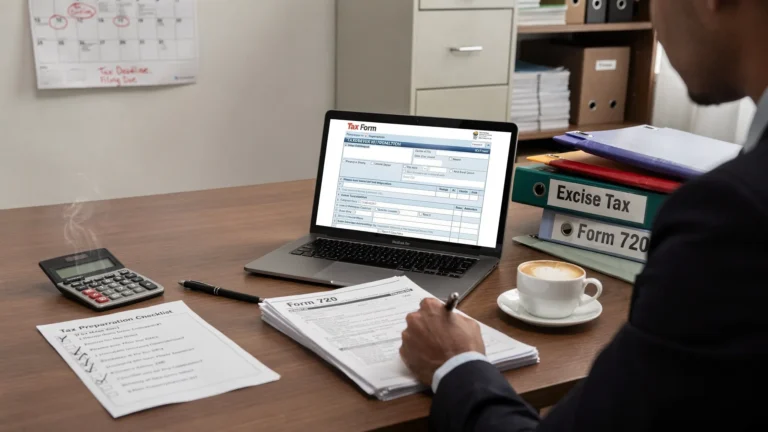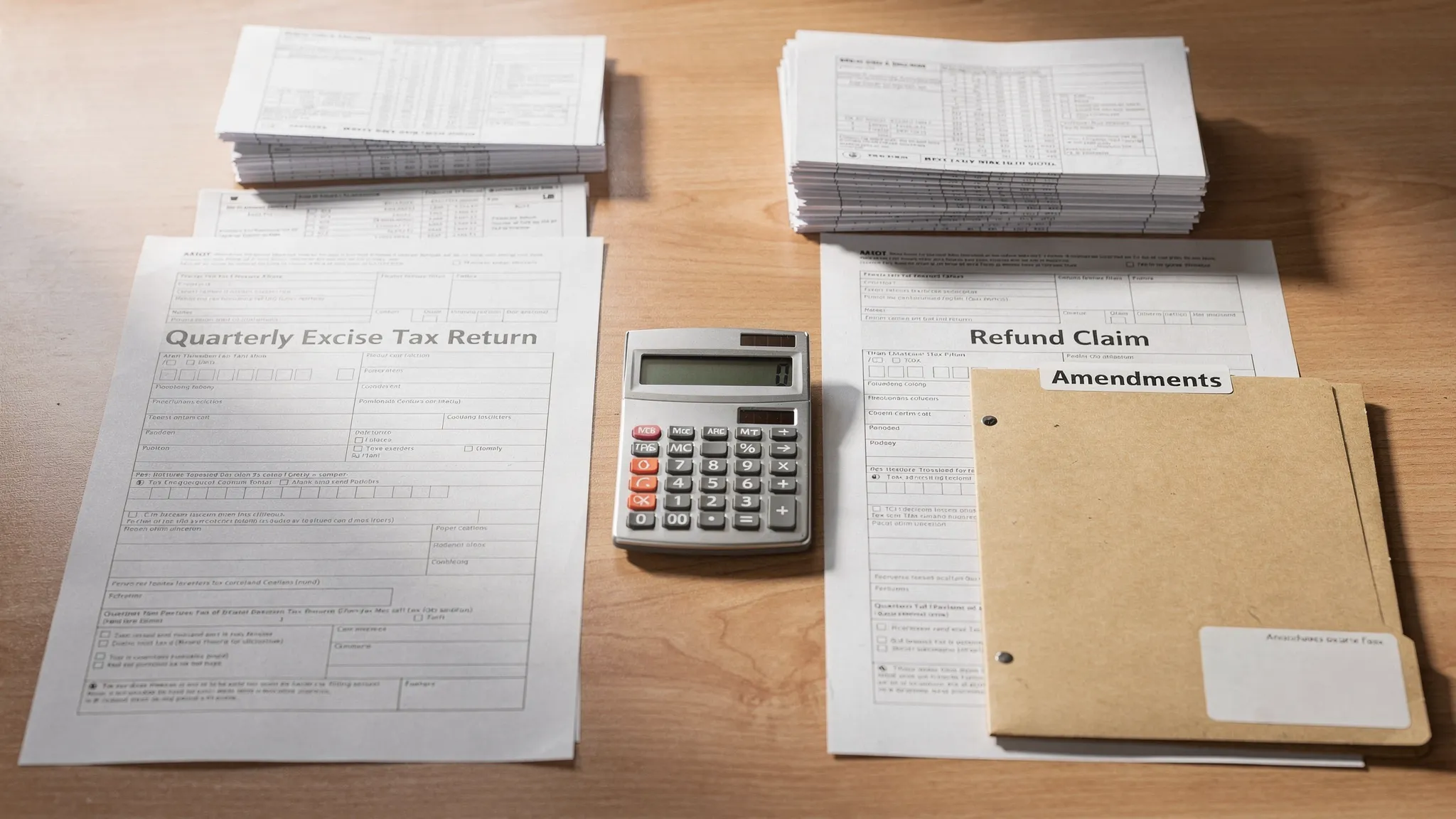
Tax Form 8849 or Form 720: Which One Do You Need?
If your business deals with federal excise taxes, the choice between IRS Form 720 and Tax Form 8849 usually comes down to one simple question: are you reporting tax you owe, or are you claiming money back?
Form 720 is the primary return used to report and pay many federal excise taxes. Form 8849 is used to request refunds or credits for certain excise taxes that were already paid, often because the tax-paid product was later used in a way that qualifies for relief.
Using the wrong form can delay processing, create IRS notices, or leave a refund unclaimed. The guide below breaks down how to choose the right filing path, what records you need, and when Form 720-X may be the better answer instead.
Quick answer: Form 720 reports tax, Tax Form 8849 claims refunds
The fastest way to decide is to follow the money.
If your business has a federal excise tax liability for the quarter, start with Form 720. If your business already paid an excise tax and now qualifies to recover it, look at Form 8849.
| Your situation | Form you likely need | Why |
|---|---|---|
| You owe federal excise tax for the current quarter | Form 720 | It is the Quarterly Federal Excise Tax Return. |
| You paid fuel excise tax but used the fuel for a qualifying nontaxable purpose | Form 8849 | It is commonly used for eligible excise tax refund claims. |
| You made a mistake on a previously filed Form 720 | Form 720-X | It is used to amend certain Form 720 filings. |
| You have current Form 720 liability and an allowable claim that can offset it | Form 720 Schedule C may apply | Some claims may be reported within the Form 720 process. |
| You need a standalone refund claim for certain excise taxes | Form 8849 | It is separate from the quarterly return. |
This table is a starting point, not a substitute for reviewing the current IRS instructions. Excise tax rules can be highly specific by product, industry, schedule, and taxpayer status.
What Form 720 is used for
IRS Form 720, Quarterly Federal Excise Tax Return, is used to report many federal excise taxes. These are taxes imposed on specific goods, services, activities, or transactions rather than on general business income.
Common Form 720 categories include:
- Fuel-related excise taxes
- Environmental taxes, including certain petroleum and chemical taxes
- Communications and air transportation taxes
- Retail and manufacturer excise taxes
- Indoor tanning services tax
- PCORI fee reporting for certain health plans
- Foreign insurance excise tax
Most Form 720 filers report by calendar quarter. The standard due dates are April 30, July 31, October 31, and January 31 for the prior quarter. If a due date falls on a weekend or federal holiday, the deadline generally moves to the next business day.
Form 720 is not only a reporting form. It is also tied to payment and deposit compliance. Some excise tax liabilities may require semi-monthly deposits through EFTPS, while others are paid with the return. That is why waiting until the filing deadline to review your excise exposure can create cash flow and penalty issues.
In practical terms, use Form 720 when your business is the party responsible for reporting and remitting the excise tax.
What Tax Form 8849 is used for
IRS Form 8849, Claim for Refund of Excise Taxes, is used to claim refunds for certain federal excise taxes. It is not a general-purpose refund form for every business tax. It is tied to specific excise tax situations and schedules.
The most common Tax Form 8849 claims involve fuel taxes. For example, a business may have paid tax on fuel but later used that fuel in a nontaxable way, such as certain off-highway business uses, farming uses, or other qualifying purposes. Eligibility depends on the facts, the type of fuel, the claimant, and the applicable schedule.
Form 8849 includes different schedules, such as Schedule 1 for nontaxable use of fuels, Schedule 2 for sales by registered ultimate vendors, Schedule 6 for certain other claims, and additional schedules for specialized claim types. The schedule matters because it tells the IRS what kind of claim you are making and what support you should have in your records.
Unlike Form 720, Form 8849 is usually not about reporting a new quarterly liability. It is about recovering tax that was already paid or treated as paid, when the law allows a refund or credit.
The main difference is timing and purpose
Many filing mistakes happen because businesses treat Form 720 and Form 8849 as interchangeable. They are related, but they do different jobs.
Form 720 answers the question: What federal excise tax does the business owe for this period?
Form 8849 answers the question: What excise tax did the business pay that it is now allowed to recover?
That difference affects the entire filing process. Form 720 is organized around taxable activity during a quarter. Form 8849 is organized around refund eligibility, claim type, and proof that tax was paid and the use or sale qualifies.
| Key factor | Form 720 | Form 8849 |
|---|---|---|
| Main purpose | Report and pay federal excise tax | Claim refund or credit of certain excise taxes |
| Typical filing rhythm | Quarterly, with some special annual reporting such as PCORI | Depends on the claim type and schedule rules |
| Common filer | Business responsible for collecting, reporting, or paying excise tax | Business or claimant eligible to recover excise tax already paid |
| Documentation focus | Taxable sales, units, rates, deposits, schedules, and quarter | Proof of tax paid, qualifying use or sale, gallons or units, certificates, and claim schedule |
| Common mistake | Missing a quarter or reporting the wrong IRS number | Filing without enough support for eligibility |
If you remember only one distinction, make it this: Form 720 is usually proactive compliance, while Form 8849 is usually refund recovery.
Real-world examples: which form fits?
The right form becomes clearer when you apply it to ordinary business scenarios.
A self-insured employer health plan that owes the PCORI fee generally reports and pays it on Form 720. Even though the fee is often handled once per year, it is still reported on Form 720, not on Form 8849.
An indoor tanning salon that provides taxable UV tanning services generally reports the indoor tanning excise tax on Form 720. If it underreported or overreported a prior quarter, the business should review whether Form 720-X is needed rather than assuming Form 8849 applies.
A company that paid federal tax on diesel but used the fuel in qualifying off-highway equipment may need Tax Form 8849, often with the appropriate fuel schedule, if it meets eligibility and documentation requirements.
A communications provider responsible for federal communications excise tax generally reports the tax on Form 720. Customer billing records, taxable charges, exemptions, and quarter-end reconciliations are the key support.
An importer or refiner with petroleum-related environmental excise tax exposure generally looks to Form 720 for reporting liabilities. If the company later identifies an overpayment or qualifying refund situation, the correction path depends on the facts, the IRS instructions, and whether the issue is an amended return or a refund claim.
Where Form 720-X fits into the decision
There is a third form that often enters the conversation: Form 720-X, Amended Quarterly Federal Excise Tax Return.
Form 720-X is generally used when you need to correct a previously filed Form 720. That could include a miscalculated tax, a wrong quarter, an incorrect category, or a later discovery that the original Form 720 was overstated or understated.
The distinction matters because not every overpayment belongs on Form 8849. If the problem is that the original Form 720 itself was wrong, an amended return may be the correct route. If the original tax was properly paid but a later qualifying use or claim allows recovery, Form 8849 may be the correct route.
When the facts are not obvious, review the current form instructions or consult a qualified tax professional. Choosing between Form 720-X and Form 8849 is especially important for businesses with high-volume fuel, environmental, or manufacturing excise activity.
A practical decision test before you file
Before choosing a form, ask these five questions in order.
- Do you owe excise tax for a quarter? If yes, Form 720 is likely the starting point.
- Are you trying to recover tax that was already paid? If yes, Tax Form 8849 may apply if your claim fits an eligible schedule.
- Was a prior Form 720 filed incorrectly? If yes, review Form 720-X before filing a refund claim.
- Do you have proof that the tax was paid? Refund claims generally require support showing that the tax was paid or passed through in a way that supports the claim.
- Can you prove the qualifying use, sale, or transaction? Form 8849 claims need documentation that matches the schedule and claim type.
This decision test helps prevent a common trap: filing a refund claim when the real issue is an amended return, or filing Form 720 when the business is actually eligible for a standalone refund claim.
Records you should gather before filing
Good documentation is the difference between a clean filing and a delayed claim. The IRS may request support, and your internal records should explain the calculation without relying on memory.
For Form 720, gather quarter-specific records such as invoices, sales reports, taxable units, gallons, barrels, policy or plan counts, taxable service charges, deposit records, and prior quarter carryovers if applicable. You should also confirm the correct EIN, tax period, tax category, and IRS number before submission.
For Form 8849, gather records that support both sides of the claim: that the tax was paid and that the later use or transaction qualifies for a refund. Fuel claims, for example, often require detailed gallon records, purchase invoices, use logs, exemption certificates where applicable, and evidence that the claimant is the proper party to file.
For Form 720-X, keep a copy of the original return, the corrected calculation, and a clear explanation of what changed. The best amendment files show the original amount, corrected amount, difference, and reason for the correction.
You can also use IRS Publication 510 as a reference point for many federal excise tax rules, but always pair it with the current instructions for the specific form and schedule you are filing.
Common mistakes that delay excise tax filings
The most expensive mistakes are often procedural, not technical. A business may know the correct tax result but still file the wrong form, use the wrong period, or leave out required supporting details.
One common mistake is using Form 8849 as a shortcut for a missed Form 720 filing. If you owe excise tax, filing a refund claim will not satisfy the quarterly reporting obligation.
Another mistake is claiming a refund without proving that the tax was paid. For many Form 8849 claims, the IRS needs a clear chain from purchase or tax payment to qualifying use or sale.
Businesses also run into trouble when they mix calendar quarters. Form 720 is tied closely to quarterly reporting, while Form 8849 claim timing depends on the schedule and claim type. Keeping a quarter-by-quarter reconciliation makes both forms easier to complete.
Finally, do not overlook registrations, certificates, or claimant status rules. Some refund schedules apply only to certain registered parties or specific types of claimants.
How eFileExcise720 helps you choose and file with confidence
Excise tax compliance becomes easier when your filing process matches the way the IRS forms work. eFileExcise720 is an IRS-authorized online platform built for federal excise tax filings, including Form 720, Form 720-X amendments, and Form 8849 claims support.
With eFileExcise720, businesses can create an account for free, file online without downloading software, use simple dashboard navigation, and access personalized customer support. The platform supports all Form 720 categories and assists filers across multiple industries that deal with excise tax reporting and refund claims.
That is especially helpful when your business has both sides of the excise tax cycle: quarterly liabilities on Form 720 and occasional refund opportunities through Form 8849. Keeping both workflows in one secure online environment can reduce confusion, improve recordkeeping, and help your team act before deadlines become urgent.
For a deeper form-by-form comparison, you can also review the eFileExcise720 guide to Form 720 vs Form 8849 or explore the different Form 8849 schedule types.
Frequently Asked Questions
Is Tax Form 8849 the same as Form 720? No. Form 720 is used to report and pay federal excise taxes. Form 8849 is used to claim refunds or credits for certain excise taxes that were already paid and qualify under specific rules.
Can I use Form 8849 if I forgot to file Form 720? Usually no. If your business owes federal excise tax for a quarter, you generally need to file Form 720. Form 8849 is not a substitute for a missing quarterly excise tax return.
Do I need Form 8849 for the PCORI fee? Most businesses that owe the PCORI fee report and pay it on Form 720. If you believe a PCORI amount was overpaid or reported incorrectly, review the IRS instructions and consider whether an amended filing is required.
What if I overpaid excise tax on Form 720? It depends on why the overpayment happened. If the original Form 720 was wrong, Form 720-X may be appropriate. If the tax was properly paid but later qualifies for refund under a specific claim type, Form 8849 may be appropriate.
Can Form 720 and Form 8849 be filed online? Yes, eligible filings can be handled electronically through authorized providers. eFileExcise720 supports online Form 720 filing, Form 720-X amendments, and Form 8849 claims support.
What documents do I need for Form 8849? You generally need records showing the tax was paid and that the use, sale, or transaction qualifies for the refund claim. Depending on the schedule, this may include invoices, fuel logs, gallon records, exemption certificates, registration details, and calculation worksheets.
Ready to file the right excise tax form?
If you need to report federal excise tax, start with Form 720. If you need to recover eligible excise tax already paid, Tax Form 8849 may be the right path. If you are correcting a prior Form 720, review Form 720-X before filing anything else.
eFileExcise720 helps businesses file Form 720 online through an IRS-authorized e-filing portal, with secure data handling, customer support, amendment support, and Form 8849 claims assistance. Create your account and make your next excise tax filing simpler, faster, and more organized.