Your Filing Timeline for Each Form 720 Quarter
If Form 720 shows up on your calendar only four times a year, it is easy to treat it as a last-minute tax task. But the safest approach is to build your filing timeline around the full quarter: collecting source data as transactions happen, checking deposit obligations during the quarter, reviewing calculations after quarter-end, and e-filing before the IRS deadline.
Use this guide as a practical 2026 planning timeline for each Form 720 quarter. The due date rule is simple, but the workflow around it is what helps you avoid rushed calculations, missing records, rejected filings, and late-payment risk.
The quarterly rule behind your Form 720 filing timeline
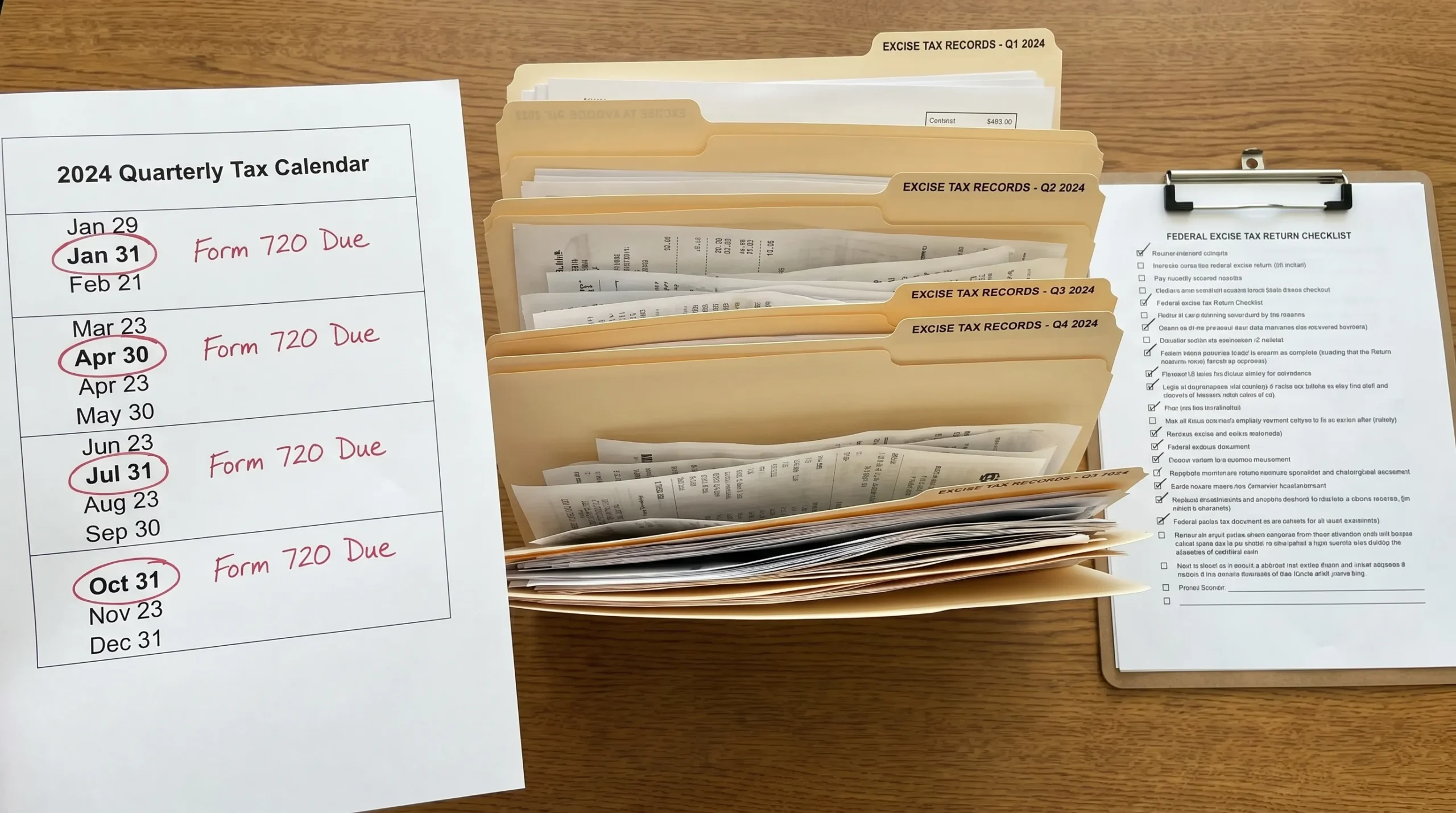
IRS Form 720, the Quarterly Federal Excise Tax Return, is generally filed by the last day of the month after the end of each calendar quarter. The IRS explains Form 720 and related instructions on its official Form 720 page.
That means your return deadline is not based on your company fiscal year. It follows the standard calendar quarters: January through March, April through June, July through September, and October through December. If the filing due date falls on a Saturday, Sunday, or legal holiday, the return is generally due on the next business day.
For 2026 filing, your Form 720 calendar looks like this:
| Form 720 quarter | Tax period covered | Standard due date rule | 2026 actual filing deadline | Planning note |
|---|---|---|---|---|
| 1st quarter | January 1 to March 31, 2026 | Last day of April | April 30, 2026 | Start review in early April so you have time to resolve data gaps. |
| 2nd quarter | April 1 to June 30, 2026 | Last day of July | July 31, 2026 | This is the key quarter for many PCORI fee filers. |
| 3rd quarter | July 1 to September 30, 2026 | Last day of October | November 2, 2026 | October 31, 2026 is a Saturday, so the filing deadline moves to the next business day. |
| 4th quarter | October 1 to December 31, 2026 | Last day of January | February 1, 2027 | January 31, 2027 is a Sunday, so the filing deadline moves to the next business day. |
These are return deadlines. Deposit requirements, if they apply to your excise tax category, may occur earlier and may follow different timing rules. Do not wait until the quarterly return deadline to check whether deposits were required.
A workback schedule for every Form 720 quarter
The best Form 720 process does not begin after the quarter closes. It begins before taxable activity happens, especially if your business reports fuel taxes, environmental taxes, communications taxes, air transportation taxes, indoor tanning taxes, foreign insurance taxes, or PCORI fees.
A practical workback schedule keeps your filing process predictable:
| Timing | What to do | Why it matters |
|---|---|---|
| Before the quarter begins | Confirm which Form 720 categories apply to your business and who owns the data. | Form 720 liability is based on taxable activity, not simply business type. |
| During the quarter | Track transactions, taxable units, invoices, premiums, gallons, barrels, lives covered, or other category-specific data. | Real-time tracking reduces end-of-quarter reconstruction errors. |
| Mid-quarter | Review whether deposits are required and confirm any EFTPS activity. | Some excise taxes require deposits before the return is filed. |
| First week after quarter-end | Reconcile source records to accounting reports and operational systems. | The return should match your books and supporting documentation. |
| 10 to 15 days after quarter-end | Prepare calculations, supporting schedules, and internal review notes. | This leaves time to correct formulas, missing IDs, and category mapping issues. |
| Final week before deadline | E-file Form 720, save acknowledgments, and confirm payment or deposit records. | E-filing early gives you time to respond if a filing is rejected or needs correction. |
This timeline is especially useful if multiple teams contribute to your Form 720 return. For example, operations may own fuel volume data, finance may own invoices and accruals, human resources may own PCORI covered-life counts, and tax may own the final return review.
Quarter 1: January through March
The first quarter filing covers taxable activity from January 1 through March 31. For 2026, the Form 720 filing deadline is April 30, 2026.
Use January as your setup month. Confirm your federal excise tax categories, update internal contacts, and review whether any business changes could affect your filing. New products, new import activity, new insurance arrangements, expanded fuel use, or new benefit plan structures can all change what must be reported.
By February, your team should already be reconciling the first month of data. This is when small issues are easiest to fix. If fuel gallons do not match inventory movement, invoices do not separate taxable and nontaxable charges, or a new product is not mapped to a Form 720 line, you still have time to correct the process before quarter-end.
After March 31, start the close immediately. The first half of April should be used for reconciliation and calculations, not for discovering which departments have the records. If you are filing electronically, aim to submit before the final day whenever possible so you have time to address any rejection or correction.
Quarter 2: April through June
The second quarter filing covers April 1 through June 30. For 2026, the deadline is July 31, 2026.
Quarter 2 deserves special attention because it is commonly associated with the Patient-Centered Outcomes Research Institute fee, often called the PCORI fee. The PCORI fee is generally reported once a year on the second quarter Form 720 by applicable insurers and self-insured health plan sponsors, depending on the plan or policy year involved. If PCORI applies to your organization, do not treat the second quarter as a routine repeat of the first quarter.
The practical risk in Quarter 2 is timing. July often brings vacations, staffing gaps, and competing midyear finance deadlines. If your filing relies on covered-life counts, plan sponsor information, premium data, or administrator reports, request those records before June closes.
For a broader preparation list, you can use the Form 720 e-filing checklist for 2026 alongside this quarterly timeline.
Quarter 3: July through September
The third quarter filing covers July 1 through September 30. The standard deadline is October 31, but for 2026, October 31 falls on a Saturday. That makes the actual 2026 filing deadline November 2, 2026.
Even when a weekend pushes the due date forward, do not build your process around the extra days. Treat October as your filing month and target completion before the final week. The extra time should be a safety buffer, not the plan.
Quarter 3 is also a good time for a midyear compliance check. If your business added a new line of taxable activity earlier in the year, changed vendors, expanded into new states, or modified invoicing, compare your Form 720 reporting against those operational changes. Many Form 720 mistakes happen because the tax process does not keep up with the business process.
Quarter 4: October through December
The fourth quarter filing covers October 1 through December 31. The standard deadline is January 31 of the following year. For the 2026 fourth quarter, January 31, 2027 falls on a Sunday, so the filing deadline is February 1, 2027.
Quarter 4 can be the easiest deadline to miss because finance teams are already managing year-end close, payroll reporting, information returns, inventory counts, and budget planning. The best approach is to assign Form 720 responsibilities before the holiday period begins.
Do not mix tax years when preparing your fourth quarter return. The return covers fourth quarter activity only, even though it is filed in the next calendar year. If tax rates, business processes, or product classifications change for the new year, keep those updates separate from the prior-year quarter you are filing.
What records should be ready before you e-file?
Your exact records depend on the type of excise tax you report. Form 720 covers many categories, so the key is to connect each reported line to source documentation that supports the calculation.
| Filing area | Records to prepare before filing | Common timeline mistake |
|---|---|---|
| Fuel and fuel-related taxes | Gallons, product type, taxable use, exemption support, inventory or terminal records, and deposit history. | Waiting until quarter-end to reconcile volume data across systems. |
| Environmental and chemical taxes | Product classifications, quantities, import or manufacturing records, and supporting schedules where required. | Assuming product descriptions are enough without classification support. |
| Communications and air transportation taxes | Taxable charges, customer billing detail, exemptions, and invoice structure. | Reporting from revenue totals without separating taxable and nontaxable charges. |
| Indoor tanning tax | Service receipts, taxable amounts, exemptions if any, and daily or monthly sales reports. | Using gross sales without checking whether non-taxable items were included. |
| Foreign insurance tax | Premium amounts, policy details, insurer information, and exemption documentation if applicable. | Missing premiums paid outside normal accounts payable workflows. |
| PCORI fee | Covered-life counts, plan or policy year details, plan sponsor information, and calculation method support. | Remembering PCORI only in July and rushing the covered-life calculation. |
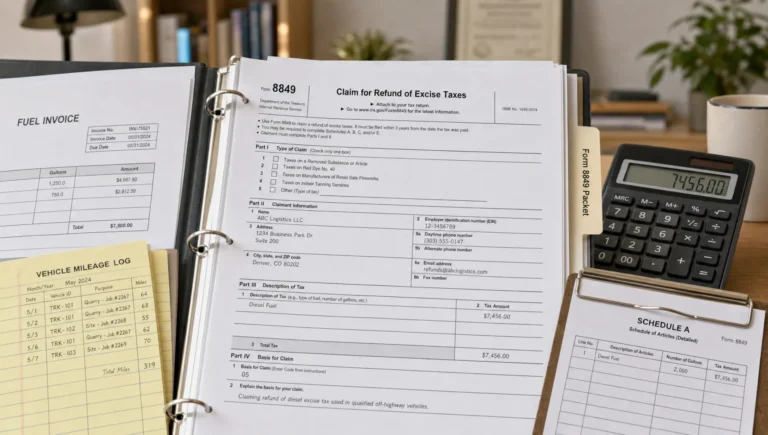
| Credits, adjustments, or refunds | Prior filings, overpayment records, exempt-use documentation, and claim support. | Using the wrong path between Form 720, Form 720-X, and Form 8849. |
If you discover after filing that a return was incorrect, an amendment may be needed. If you are trying to claim a refund or credit for certain excise taxes, Form 8849 may be the better path. This comparison of Form 720 vs. Form 8849 can help you understand the difference.
Deposits, payments, and the return are separate timeline items
One of the most important Form 720 timeline lessons is that filing the quarterly return is not always the same as paying the tax. Certain excise taxes are subject to deposit rules, often through the Electronic Federal Tax Payment System. You can review payment access through EFTPS, but always confirm the rules that apply to your specific tax category.
Think of the timeline in three separate layers.
First, the filing deadline tells you when the quarterly Form 720 return is due. This is the April, July, October or November, and January or February deadline shown above.
Second, deposit timing tells you whether tax had to be deposited during the quarter before the return was filed. Deposit rules can vary and may include special timing rules, so do not assume they follow the same weekend or holiday treatment as return due dates.
Third, payment documentation shows what was actually paid, when it was paid, and how it matches the return. If a deposit was made, keep proof with the quarter file. If a balance remains due with the return, document how it was handled according to IRS instructions.
For penalty risk, timing matters. Late filing, late payment, inaccurate reporting, and missed deposits can create separate issues. You can read more in this guide to Form 720 penalties and interest.
How to protect proof of timely filing
A good timeline is not complete until the return file is complete. After filing, save the submitted return, calculation workpapers, payment or deposit confirmations, IRS acknowledgments, and any internal approval notes.
If you e-file, the acknowledgment is an important part of your proof. If the return is rejected, the acknowledgment or rejection notice also helps you understand what needs to be corrected. This is one reason filing before the final day is safer than waiting until the deadline.
If you had no excise tax liability for a quarter but still have a filing obligation, confirm whether a zero liability return is appropriate. You can learn more about that process here: File Form 720 zero liability return online.
Frequently Asked Questions
What are the filing quarters for Form 720? Form 720 follows calendar quarters: January through March, April through June, July through September, and October through December. The return is generally due on the last day of the month after each quarter ends.
What are the 2026 Form 720 due dates? The 2026 quarterly filing deadlines are April 30, 2026 for Quarter 1, July 31, 2026 for Quarter 2, November 2, 2026 for Quarter 3, and February 1, 2027 for Quarter 4.
What happens if the Form 720 due date falls on a weekend or holiday? If the return due date falls on a Saturday, Sunday, or legal holiday, the filing deadline generally moves to the next business day. Deposit rules may differ, so confirm those separately.
Is the PCORI fee filed every quarter? No. The PCORI fee is generally reported annually on the second quarter Form 720 by applicable insurers and self-insured plan sponsors. The second quarter return is due July 31.
Do I still need to file if there is no tax due for a quarter? It depends on your filing obligation and facts. Some businesses may need to file a zero liability Form 720 until they are no longer required to file. When in doubt, confirm with the IRS instructions or a qualified tax professional.
Can I e-file Form 720 after the due date? You should file as soon as possible if you missed a deadline. Filing late may reduce further penalty exposure compared with waiting, but penalties and interest may still apply depending on the situation.
File each Form 720 quarter with less last-minute stress
A reliable filing timeline makes Form 720 easier to manage quarter after quarter. The key is to start before the quarter ends, separate filing deadlines from deposit requirements, and keep complete records for every calculation.
With eFileExcise720, you can file Form 720 online through an IRS-authorized e-filing platform with secure data handling, simple dashboard navigation, free account creation, no software download, and personalized customer support. The platform supports all Form 720 categories and also assists with Form 720 amendments and Form 8849 claims.
Create your account and start your next Form 720 filing online today, before the deadline becomes urgent.