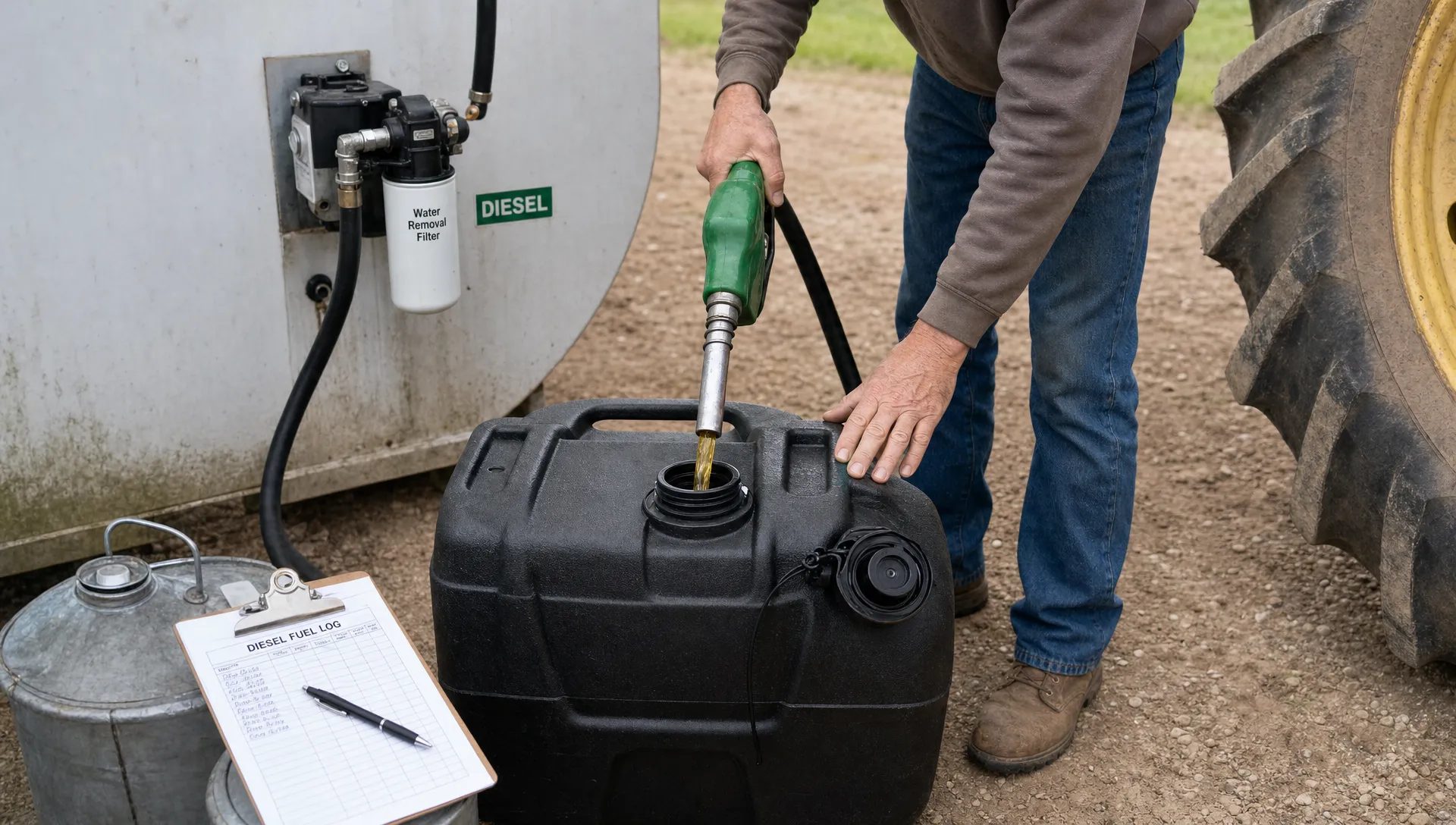
What Counts as a Nontaxable Use of Fuel? A Full List by Fuel Type
If your business bought taxed fuel but used it for farming, off-highway equipment, certain government operations or another IRS-approved exempt purpose, a nontaxable use of fuel claim may let you recover the federal excise tax paid on those gallons. The key is matching the fuel type and actual use to the correct IRS code before you file IRS Form 720 online.
This guide explains what counts as nontaxable fuel use by fuel type, how it connects to Form 720 Schedule C and what records you should keep before reporting a credit, refund or adjustment.
What Is a Nontaxable Use of Fuel?
A nontaxable use of fuel is an IRS-recognized use where taxable fuel is not consumed in the regular highway transportation system or is used by a qualifying exempt user. In plain terms, the fuel may have been taxed when purchased, but the final use makes the tax recoverable if the IRS rules are met.
Common examples include diesel used in farm machinery, gasoline used in certain off-highway business equipment, fuel used by a state or local government and fuel used in specific buses, trains, aircraft or commercial fishing boats.
Before preparing a nontaxable use of fuel claim, start with three questions: Was federal excise tax paid on the gallons? Was the fuel used in a qualifying activity? Can you document the use by fuel type, gallons, dates and equipment or vehicle?
How Nontaxable Fuel Use Relates to Form 720
IRS Form 720 is the Quarterly Federal Excise Tax Return. Businesses use it to report many federal excise taxes, including fuel-related taxes. Schedule C of Form 720 is where certain fuel tax claims and adjustments are reported when the filer qualifies under the instructions.
If you are still confirming who needs to file Form 720 or what the return covers beyond fuel, this overview of what Form 720 is used for gives broader context before you focus on fuel credits.
A fuel claim does not always belong on Schedule C. Depending on the situation, a business may use Form 720 Schedule C, Form 8849 or Form 4136. The same gallons should not be claimed twice.
Which Fuel Uses Are Exempt From Federal Excise Tax?
The IRS uses Type of Use codes to classify nontaxable fuel uses. These codes matter because not every code is allowed for every fuel type.
| Code | General Type of Use |
|---|---|
| 1 | On a farm for farming purposes |
| 2 | Off-highway business use |
| 3 | Export |
| 4 | In a boat engaged in commercial fishing |
| 5 | In certain intercity and local buses |
| 6 | In a school bus |
| 7 | In a qualified local bus |
| 8 | In an aircraft or vehicle owned by an aircraft museum |
| 9 | In a military aircraft |
| 10 | Certain helicopter and fixed-wing aircraft uses allowed by IRS instructions |
| 11 | Exclusive use of a state or local government |
| 12 | In a train |
| 13 | In commercial aviation, other than foreign trade |
| 14 | Exclusive use of a nonprofit educational organization |
| 15 | In an aircraft in foreign trade or trade between the United States and its possessions |
| 16 | In a qualified blood collector organization vehicle |
The nontaxable use of fuel claim IRS rules focus on the actual use of the fuel, not just the buyer. A contractor working for a city, for example, should not assume the fuel qualifies as government use unless the facts meet the exclusive-use rule.
Full List by Fuel Type
Use this table as a practical starting point. Always check the latest Form 720 instructions and the applicable IRS fuel guidance before filing because fuel rules, claim lines and credit rates can change.
| Fuel type | Commonly allowed Schedule C Type of Use codes | Practical note |
|---|---|---|
| Gasoline | 2, 4, 5, 7, 11, 12, 13, 14, 15, 16 | Farming gasoline is generally not claimed as Type 1 on Form 720 Schedule C. Farmers often look to Form 4136 or other allowed claim routes. |
| Aviation gasoline | 3, 9, 11, 13, 14, 15 | Commonly tied to export, military, government, commercial aviation, nonprofit educational or foreign trade uses. |
| Undyed diesel fuel | 1, 2, 3, 5, 6, 7, 8, 11, 12, 14, 16 | Common for farming and off-highway business equipment when tax-paid undyed diesel is used in qualifying activities. |
| Undyed kerosene, non-aviation | 1, 2, 3, 5, 6, 7, 8, 11, 12, 14, 16 | Often follows diesel-like rules for certain farm, off-highway, bus, train and government uses. |
| Kerosene used in aviation | 1, 2, 3, 5, 8, 9, 10, 11, 13, 14, 15 | Aviation kerosene has separate treatment depending on how it was taxed and used. |
| Alternative fuels | 1, 2, 3, 5, 6, 7, 11, 14, 16 | Can include fuels such as LPG, CNG, LNG and other qualifying alternative fuels under IRS rules. |
| Gasohol and taxable fuel blends | Depends on the underlying taxable fuel and IRS line instructions | Documentation should show blend type, gallons, tax paid and final use. |
| Biodiesel and renewable diesel | Often follows diesel treatment when taxed and used as diesel fuel | Confirm whether the fuel was taxed, dyed, blended or sold under a special rule. |
Nontaxable Uses of Gasoline
A nontaxable use of fuel claim for gasoline most often depends on whether the fuel was used outside taxable highway travel or by a qualifying exempt user. Gasoline claims need careful review because the allowed Schedule C codes are narrower than many filers expect.
Fuel Used for Farming
Gasoline used on a farm for farming purposes may qualify for a fuel tax credit under IRS rules, but it is not usually handled as a Type 1 gasoline claim on Form 720 Schedule C. Farmers should confirm whether Form 4136 or another permitted route applies.
Qualifying farm use generally means activities such as cultivating soil, raising or harvesting agricultural products, operating farm machinery or handling livestock operations on the farm.
Fuel Used for Off-Highway Business Activities
Gasoline used in business equipment that is not operated on public highways may qualify under Type 2. Examples can include certain pumps, compressors, generators, industrial equipment and other business machinery.
For a nontaxable use of fuel claim, off-highway business use does not mean ordinary driving between jobsites. The fuel must be consumed in qualifying equipment or activity, not in a registered highway vehicle used on public roads.
Fuel Used for Certain Government Purposes
Gasoline used exclusively by a state or local government can qualify under the appropriate code. The word exclusively matters. Fuel purchased or used by a private party for a government project may need separate analysis.
Other Qualifying Gasoline Uses
Other gasoline categories can include commercial fishing boats, certain buses, trains, qualified nonprofit educational organizations, some aviation-related uses and qualified blood collector organization vehicles. The specific code must match both the fuel type and use.
Nontaxable Uses of Diesel Fuel
A nontaxable use of fuel claim for diesel is common because diesel powers many farm machines, construction assets, refrigeration units, generators and other equipment that may operate away from public highways.
Many businesses search for non taxable diesel fuel when they are actually dealing with two different situations. Dyed diesel is usually sold without the highway excise tax for exempt use. Undyed diesel is often taxed when purchased, then may support a credit or refund if the final use qualifies.
Diesel Used in Farming
Diesel used on a farm for farming purposes can qualify when it powers tractors, combines, irrigation pumps and other machinery used in agricultural production. Fuel used in a highway vehicle for road travel is treated differently, even if the vehicle is owned by a farm.
Diesel Used in Construction and Other Off-Highway Equipment
Construction companies often use undyed diesel in bulldozers, cranes, excavators, loaders, stationary engines and jobsite generators. If the fuel was taxed and then used in qualifying off-highway business equipment, a claim may be available.
The nontaxable use of fuel claim off-highway business use category is not a shortcut for all construction fuel. It requires records showing gallons, equipment, dates and business purpose.
Diesel Used for Certain Government Activities
Diesel used exclusively by state or local governments may qualify. Examples can include fuel used in eligible public works equipment, local government buses or other qualifying operations, depending on the code and facts.
Other Exempt Diesel Uses
Diesel may also qualify when used in certain buses, trains, exports, aircraft or vehicle museum uses, nonprofit educational organization use and qualified blood collector organization vehicles. The fuel must be undyed and tax-paid if you are claiming back excise tax through Schedule C.
Nontaxable Uses of Kerosene
A nontaxable use of fuel claim for kerosene generally follows rules similar to diesel for non-aviation kerosene, but the details depend on whether it is undyed, dyed, used in aviation or used for another special purpose.
Undyed kerosene can appear in farm, off-highway business, certain bus, train, export, government, nonprofit educational and qualified blood collector organization categories. Kerosene used in aviation has its own set of rules and lines.
If kerosene was dyed and sold tax-free for a qualifying purpose, there may be no federal excise tax to recover. A claim usually requires proof that tax was actually paid.
Nontaxable Uses of Aviation Fuel
Aviation gasoline and kerosene used in aviation are treated separately from highway gasoline, diesel and non-aviation kerosene. Qualifying uses can include export, military aircraft, state or local government use, nonprofit educational organization use, commercial aviation and aircraft in foreign trade.
Aviation fuel claims can be more technical because tax rates and allowed uses may differ by product and activity. Operators should confirm whether the fuel was taxed at the standard rate, a reduced aviation rate or handled through a tax-exempt sale.
Nontaxable Uses of Alternative Fuels
Alternative fuels may include products such as liquefied petroleum gas, compressed natural gas, liquefied natural gas and other fuels identified in IRS guidance. Allowed nontaxable uses can include farming, off-highway business use, export, certain buses, government use, nonprofit educational organization use and qualified blood collector organization vehicles.
For a nontaxable use of fuel claim, off-highway business use rules still require the same core proof: the gallons, the equipment, the business activity and whether the fuel was tax-paid.
Nontaxable Uses of Gasohol and Fuel Blends
Gasohol and blended fuels require an extra layer of documentation because the claim may depend on the underlying taxable fuel and the blend composition. Businesses should keep invoices that show the product type, gallons, tax charged and seller information.
If a taxable blend is used in qualifying off-highway equipment or another exempt use, it may support a claim. If it was sold under a tax-free or reduced-tax rule, the recoverable amount may be limited or unavailable.
Nontaxable Uses of Biodiesel and Renewable Diesel
Biodiesel and renewable diesel are not automatically exempt. When they are taxed and used like diesel fuel, the qualifying nontaxable use usually follows diesel-related rules. When they are blended, dyed or sold under a special tax treatment, the analysis changes.
Keep blending records, product transfer documents, invoices and equipment logs. These records help prove whether the fuel was taxable at purchase and whether the final use qualifies.
Fuel Used for Farming: What Qualifies?
Farm fuel generally qualifies when used on a farm for farming purposes. This can include operating tractors, combines, harvesters, irrigation pumps, feed grinders and other equipment directly tied to agricultural production.
Fuel used for personal driving, commuting, highway hauling or nonfarm activities does not qualify simply because a farm owns the vehicle. The IRS looks at the actual use of the fuel.
Fuel Used in Off-Highway Equipment and Machinery
Off-highway business use is one of the most common categories. It generally means fuel used in a trade or business in equipment that is not a highway vehicle registered or required to be registered for highway use.
Examples can include construction machinery, forklifts, stationary generators, refrigeration units and certain industrial equipment. The nontaxable use of fuel claim IRS rules require a clear link between the gallons and the qualifying off-highway asset.
Fuel Used by State and Local Governments
Fuel used exclusively by a state or local government may qualify for nontaxable treatment. The government-use category can apply across several fuel types, but it is not the same as fuel used by a private contractor.
For example, a county-owned vehicle or qualifying public works machine may be different from a contractor-owned truck used on a county project. Ownership, control, exclusive use and records all matter.
Fuel Used for Certain Commercial Purposes
Some commercial uses qualify even though they are business activities. These can include fuel used in commercial fishing boats, trains, certain local or intercity buses and specified aviation activities.
The commercial label alone is not enough. A freight truck using diesel on public highways is generally part of the taxed highway system, while a train or commercial fishing boat may fall under a specific nontaxable category.
When Is Fuel Used for Heating Considered Nontaxable?
Fuel used for heating may be nontaxable when it is sold or used as heating fuel rather than as highway transportation fuel. In many cases, heating fuel is dyed or sold under rules that prevent highway tax from being charged at the start.
If you did not pay federal excise tax, there is usually no tax to recover. If tax was paid by mistake, the correct remedy may depend on the product, seller documentation and IRS claim rules.
What Fuel Uses Still Require Documentation?
Nearly all fuel tax claims require documentation. Even if the use is clearly exempt, the IRS can ask you to prove the gallons, product type, tax paid and qualifying use.
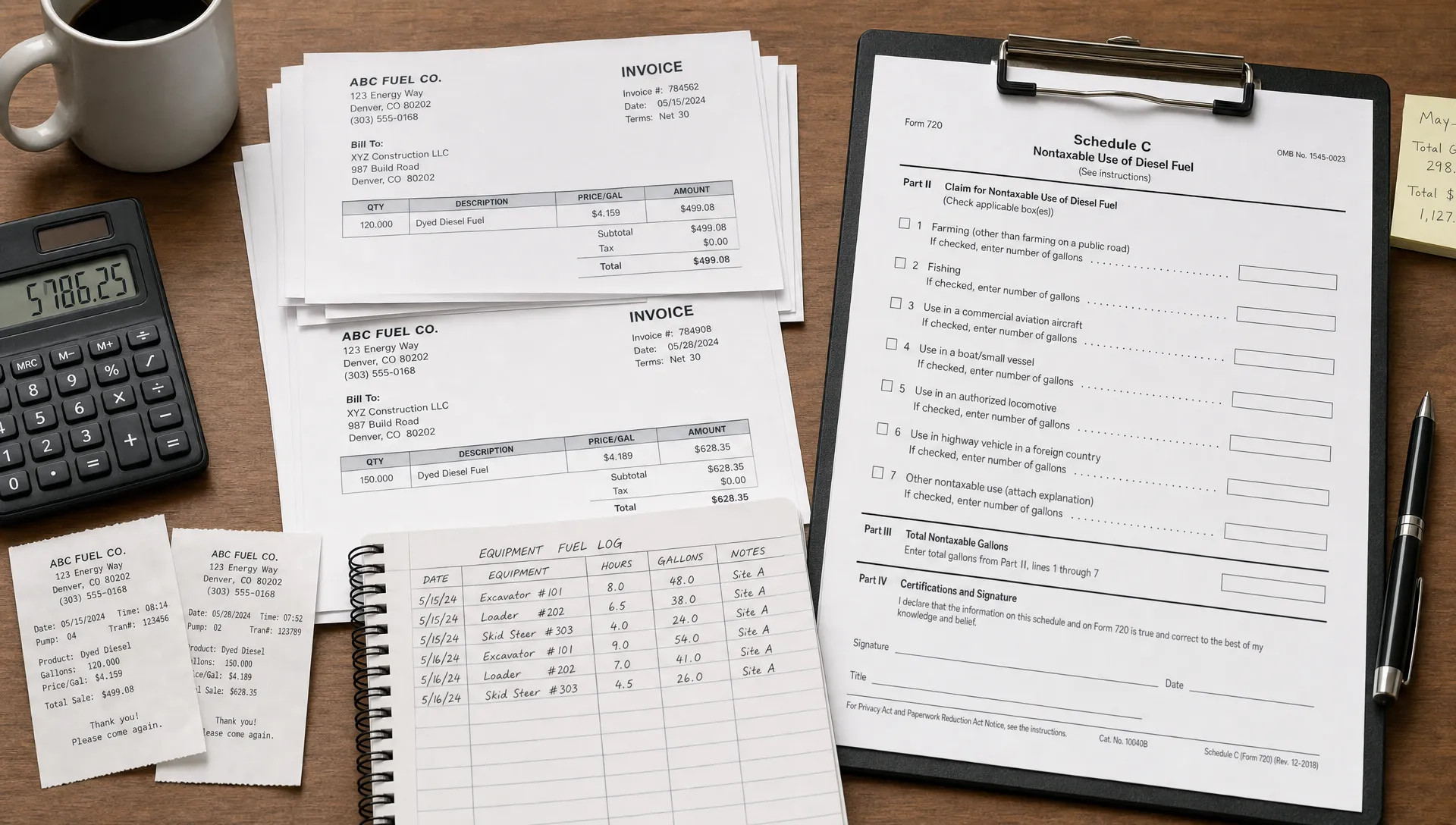
Strong documentation usually includes fuel receipts, invoices, equipment logs, meter readings, dispatch records, farm records, government-use records, mileage records where relevant and proof that the same gallons were not claimed elsewhere.
How to File a Nontaxable Use of Fuel Claim
Here is how to file a nontaxable use of fuel claim without mixing up the forms or duplicating gallons.
- Identify the fuel product, such as gasoline, undyed diesel, undyed kerosene, aviation fuel or alternative fuel.
- Confirm that federal excise tax was paid on the gallons you want to claim.
- Match the actual fuel use to the correct IRS Type of Use code.
- Choose the correct reporting path, such as Form 720 Schedule C, Form 8849 or Form 4136.
- Keep invoices, logs and supporting records before filing.
- File by the applicable deadline and avoid claiming the same gallons on more than one form.
If your business needs a federal tax ID before filing, you can apply for an EIN through the IRS. Many filers also compare the Form 720 PDF, the Form 720 instructions and the Form 720 instructions pdf before choosing to file Form 720 online.
Which Form 720 Schedule Applies to Fuel Tax Adjustments?
Fuel tax adjustments and claims tied to the quarterly return generally appear on Form 720 Schedule C. The exact line depends on the fuel product, type of use and claim category.
| Situation | Common filing route | Key caution |
|---|---|---|
| Claiming eligible fuel tax on a quarterly Form 720 return | Form 720 Schedule C | Use the correct fuel line and Type of Use code. |
| Claiming certain fuel credits on an income tax return | Form 4136 | Do not also claim the same gallons on Form 720. |
| Requesting certain excise tax refunds | Form 8849 | Confirm eligibility and timing before filing. |
| Correcting a filed Form 720 | Form 720-X | Amend only the items that need correction. |
If you already filed and later found an error, eFileExcise720 provides a dedicated page for Form 720-X online filing.
Common Mistakes When Reporting Nontaxable Fuel Use on Form 720
A clean nontaxable use of fuel claim depends on consistency. Small recordkeeping gaps can cause larger problems if gallons, fuel type or use codes do not match your invoices and logs.
Common mistakes include claiming dyed fuel when no highway tax was paid, using the wrong Type of Use code, treating highway driving as off-highway use, claiming the same gallons on multiple forms, using gasoline farm rules incorrectly on Schedule C and failing to separate taxable and nontaxable gallons.
Another common issue is relying on a generic answer to how to file Form 720 instead of reading the specific fuel line instructions. Fuel claims require more detail than many other excise tax categories.
Records to Keep for Nontaxable Fuel Use
Keep records long enough to support the return if the IRS asks for proof. Your file should show what was purchased, how it was taxed and how it was used.
Useful records include fuel invoices, bulk tank logs, pump meter readings, equipment hour logs, vehicle or machine IDs, farm work records, jobsite records, government-use authorizations, export documents and allocation worksheets.
If you use eFileExcise720, you can create a free account, prepare Form 720 without downloading software and use secure online filing with customer support. The platform supports Form 720 categories, amendments and fuel-related filing needs, but your source records should still be complete before you file.
Frequently Asked Questions About Nontaxable Fuel Use
What is considered a nontaxable use of fuel? A nontaxable use is an IRS-recognized fuel use where federal excise tax is not ultimately owed, such as qualifying farm use, off-highway business use, certain government use, commercial fishing, trains, specified buses and some aviation uses.
Is farm fuel exempt from federal fuel tax? Farm fuel can qualify when used on a farm for farming purposes. The correct claim route depends on the fuel type and form instructions, especially for gasoline.
Can off highway fuel be claimed as nontaxable? Yes, qualifying off-highway business fuel can be claimed when tax was paid and the fuel was used in eligible business equipment or machinery. Highway travel in a registered vehicle generally does not qualify.
Does nontaxable fuel use need to be reported on Form 720? Some claims are reported on Form 720 Schedule C, but others may belong on Form 8849 or Form 4136. The correct form depends on the taxpayer, fuel type, timing and claim category.
How do you claim a fuel tax credit? Match the fuel to the correct IRS use code, confirm tax was paid, calculate eligible gallons and use the proper form. Do not claim the same gallons on more than one filing.
What records are needed for a fuel tax credit? Keep invoices, receipts, gallon logs, equipment records, fuel tank records, mileage or hour logs where relevant and documents proving the qualifying use.
Which fuels are subject to federal excise tax? Common taxable fuels include gasoline, diesel fuel, kerosene, aviation gasoline, kerosene used in aviation, certain alternative fuels and taxable fuel blends. Special rules can apply to dyed fuel, exports and exempt users.
What happens if I don't file Form 720? If you are required to file Form 720 and do not file, the IRS may assess failure-to-file penalties, failure-to-pay penalties, deposit penalties and interest. Continued noncompliance can also create notices and collection issues.
How much is the IRS penalty? Penalties vary by situation. A common failure-to-file penalty is 5% of unpaid tax per month, up to 25%, while a failure-to-pay penalty is commonly 0.5% per month, up to 25%. Excise tax deposit penalties can also apply depending on how late the deposit is.
File Fuel Excise Tax Forms With Less Guesswork
Fuel tax rules are detailed, especially when you are separating taxable highway use from exempt gallons. If your business needs to file Form 720 online, amend a prior return or manage fuel-related excise tax reporting, eFileExcise720 offers IRS-authorized e-filing, secure data handling, dashboard navigation and personalized customer support.
Before you file, confirm the fuel type, Type of Use code, gallons and claim form. Then use a filing process that helps you submit the return accurately and on time.